A strong writing system for elementary teachers completely changed the way my writing block felt and functioned. I don’t know about you, but my writing lessons used to feel a little all over the place. One day, we were practicing complete sentences. The next day, we jumped into a writing prompt. Then suddenly I was trying to teach revision to students who still weren’t confident in organizing a paragraph.
Some lessons worked really well. Some completely flopped. And honestly, I kept feeling like I was starting over every single week. That’s when I realized the problem wasn’t that my students hated writing. They just needed more consistency. They needed to know:
- what writing time would look like
- how to organize their thinking
- what to do when they got stuck
- how all the pieces of writing actually connected together
Once I stopped treating writing as separate activities and started treating it as a complete elementary writing system, everything changed. My students became more confident.
Writing time felt calmer. And I finally felt like the skills we were practicing were actually sticking. That’s what eventually led me to create the START Writing System.
What a Strong Writing System for Elementary Students Actually Includes
A lot of writing programs focus heavily on prompts. But strong writing instruction for elementary students includes so much more than giving students something to write about. Students need opportunities to:
- brainstorm ideas out loud
- build confidence over time
- hear modeled writing
- practice sentence expansion
- organize paragraphs visually
- revise with support
That’s why I stopped thinking about writing as isolated assignments and started thinking about it as a complete writing process. Inside my writing block, I’m constantly layering:
- discussion
- modeling
- guided practice
- independent writing
- revision
- reflection
Because confident writers are built through repetition and consistency, not one perfect lesson, this is also why I spend so much time teaching writing structure directly. If students don’t understand:
- how ideas connect
- how paragraphs are organized
- how to explain their thinking clearly
That’s where systems like the START framework and the 8-Week Writing Cycle became so important in my classroom. They gave students repeated exposure to the same writing habits in ways that felt manageable instead of overwhelming.
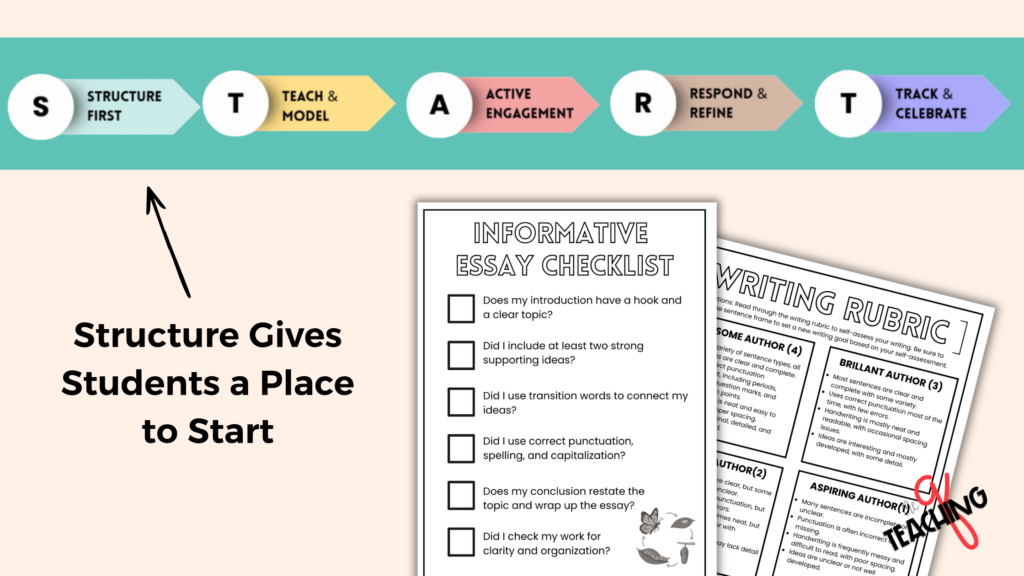
Structure First Changes Everything in a Writing System for Elementary Teachers
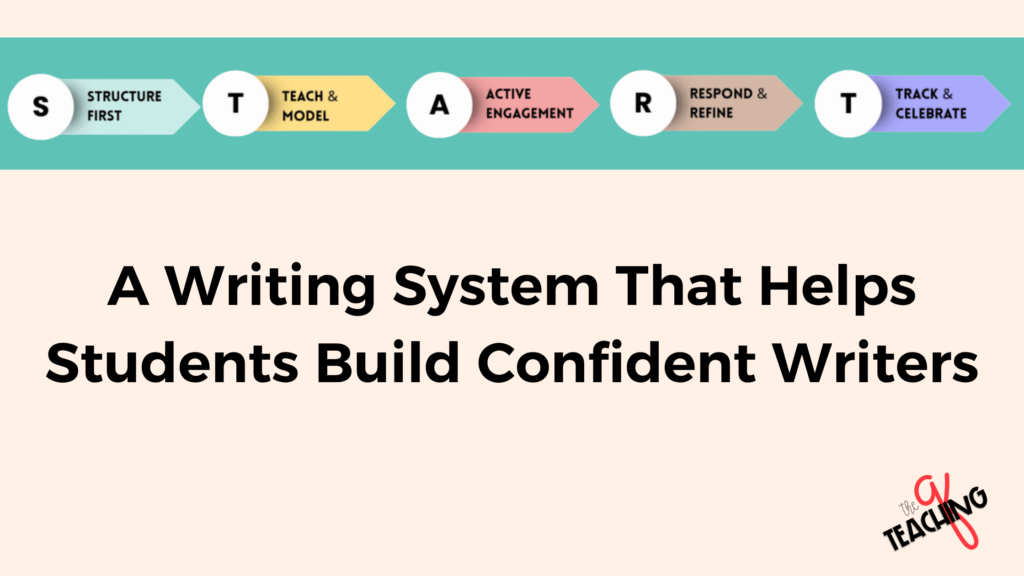
The first part of the START system is probably the piece that changed my writing block the most:
S = Structure First
Before students can write independently, they need a structure they can rely on. That doesn’t mean every paper looks identical. It means students understand:
- what each section of writing should include
- how to begin
- how to organize ideas
- how to move from brainstorming into paragraphs
This is why I started putting prompts directly on student pages, using sentence stems, and creating anchor charts students could consistently reference. Once students stop wondering what they’re supposed to do, they can finally focus on what they want to say. Structured writing support also helps students transfer skills into:
- informative writing
- opinion writing
- narrative writing
- paragraph writing
- essay writing
Instead of treating every assignment like a brand new task.
Modeling Writing Out Loud Matters More Than We Think
The second part of the START system focuses on something students need constantly:
T = Teach & Model
I used to explain writing. Now I model it. There’s a huge difference. Students need to hear how writers actually think through ideas. That means stopping while writing and saying things like: “This sentence feels incomplete.” “I need a transition word here.”I already used that detail once. Those small think-aloud moments help students understand that writing is a process, not something people magically do perfectly on the first try.
Modeling also helps students learn:
- how to expand ideas
- how to connect sentences
- how to organize paragraphs
- how to revise writing with purpose
If you want to dive deeper into writing instruction foundations, this post connects really well here:
https://theteachingq.com/how-to-teach-writing-to-elementary-students/
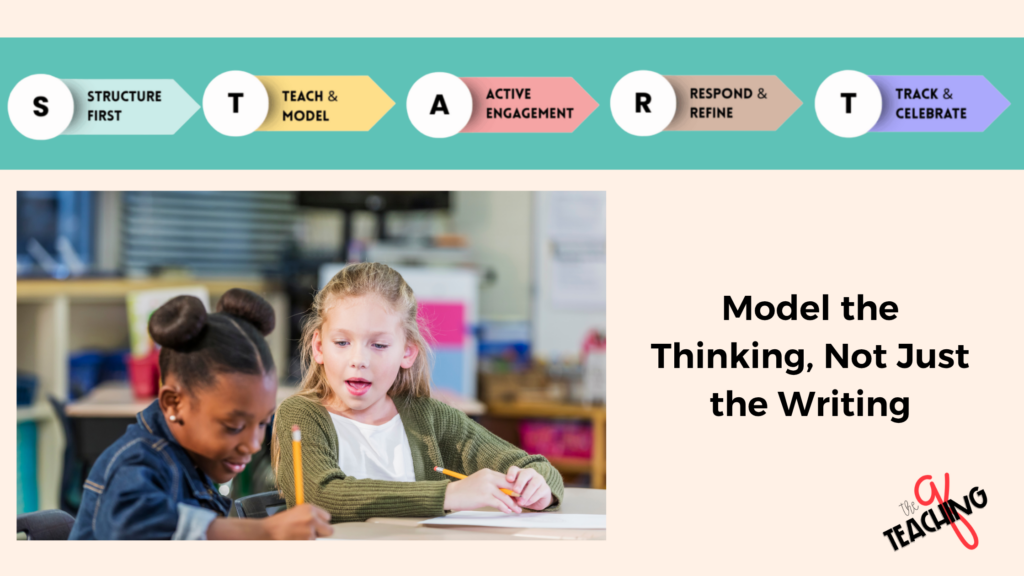
Writing Confidence Grows Through Active Engagement
The “A” in START stands for:
A = Active Engagement
This part of the START system changed the confidence level in my classroom more than I expected. For a long time, I thought writing growth mostly happened during independent work time. But once I started building in more active engagement before writing, I noticed students had so much more to say. Writing develops faster when students can rehearse their thinking before they ever start drafting. That’s why I intentionally make space for:
- turn and talks
- collaborative brainstorming
- oral rehearsal
- shared responses
- partner discussions
- sentence building together
Sometimes students can explain an idea perfectly out loud but struggle to transfer it onto paper independently. Active engagement helps bridge that gap. It gives students a chance to:
- organize their thoughts verbally
- hear stronger examples from peers
- practice academic language
- build confidence before writing alone
And honestly, it changes the whole energy of the writing block. Students become more willing to participate because they no longer feel like they have to create the perfect response immediately. Instead of staring at a blank page, they walk into writing already carrying ideas with them. That support matters, especially for reluctant writers or students who need more processing time before writing independently. This is also something I include inside the free START Writing System because active engagement can completely change how students approach writing.
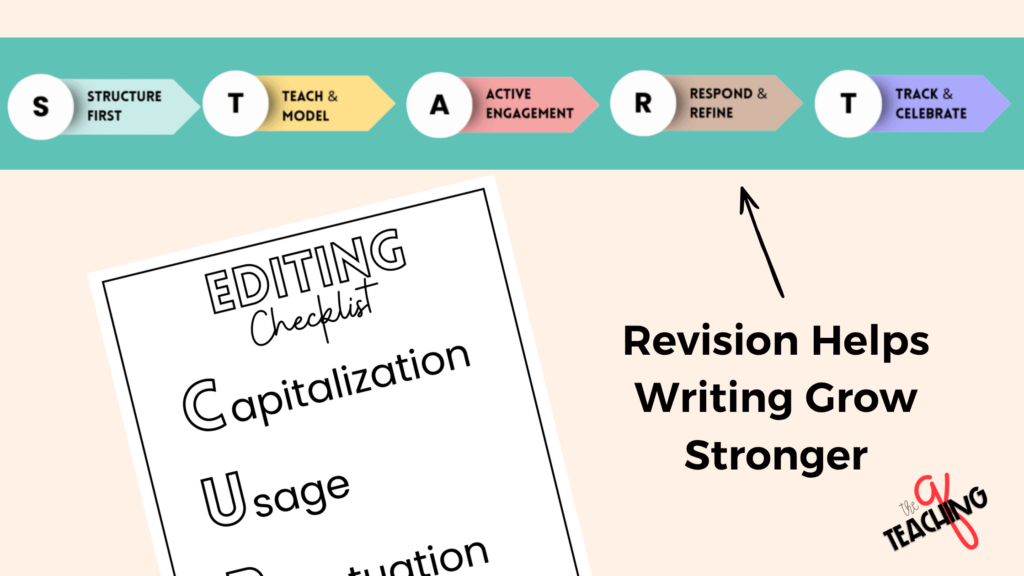
Revision Should Feel Like Support, Not Punishment
One thing I noticed early on was that students thought revision only meant fixing spelling mistakes.
But revision is really about improving communication.
R = Respond & Refine
This part of the system focuses on helping students:
- clarify ideas
- add details
- strengthen explanations
- reorganize confusing parts
- reread writing with purpose
Mini-lessons became really important here. Instead of saying: I started teaching one revision skill at a time. That shift made revision feel manageable instead of frustrating. This also connects closely with building stronger writing habits overall, which I talk more about here!
Students Need to See Their Growth as Writers
The final part of START is:
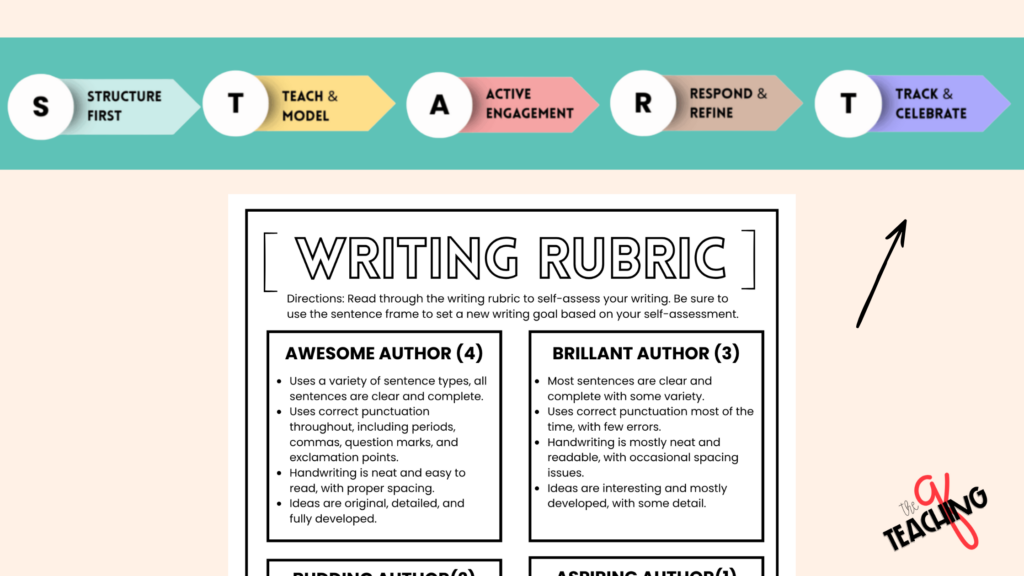
T = Track & Celebrate
This part gets overlooked constantly during writing instruction. Students need opportunities to recognize their own progress. That might include:
- self-assessments
- rubrics
- writing celebrations
- comparing old and new writing
- sharing writing aloud
Confidence grows when students can actually see improvement happening. And honestly, once students begin noticing their growth, they become much more willing to take risks in writing.
Common Writing Struggles I See in Elementary Classrooms
Over the years, I’ve noticed the same writing struggles come up again and again. Students often:
- stop after one sentence
- struggle to expand ideas
- write disorganized paragraphs
- avoid revision
- lose confidence quickly
That’s why so much of my instruction focuses on:
- modeling
- structure
- guided support
- repetition
- consistent routines
Because struggling writers usually do not need harder assignments. They need clearer systems.
How the 8-Week Writing Cycle Supports Elementary Writing Instruction
Once I started using the START framework consistently, my writing block finally felt connected. Lessons stopped feeling random. Students understood:
- the routine
- the process
- the expectations
- how writing skills connected together
That’s also what eventually led me to create the full 8-Week Writing Cycle. I wanted a way to organize:
- mini-lessons
- guided writing
- genre instruction
- revision
- modeling
- independent practice
The goal was never to create more work. It was to make elementary writing instruction feel more manageable for teachers while giving students consistent support the entire way through. If you want to explore that more, you can find the full 8-Week Writing Cycle here!
Free START Writing System for Elementary Teachers
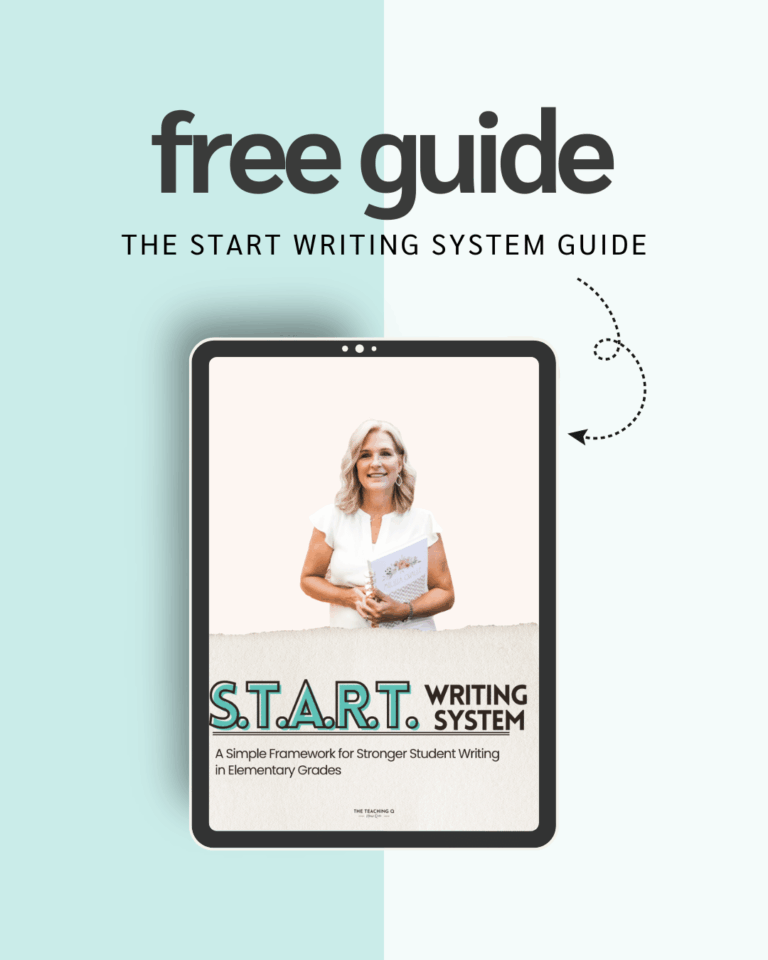
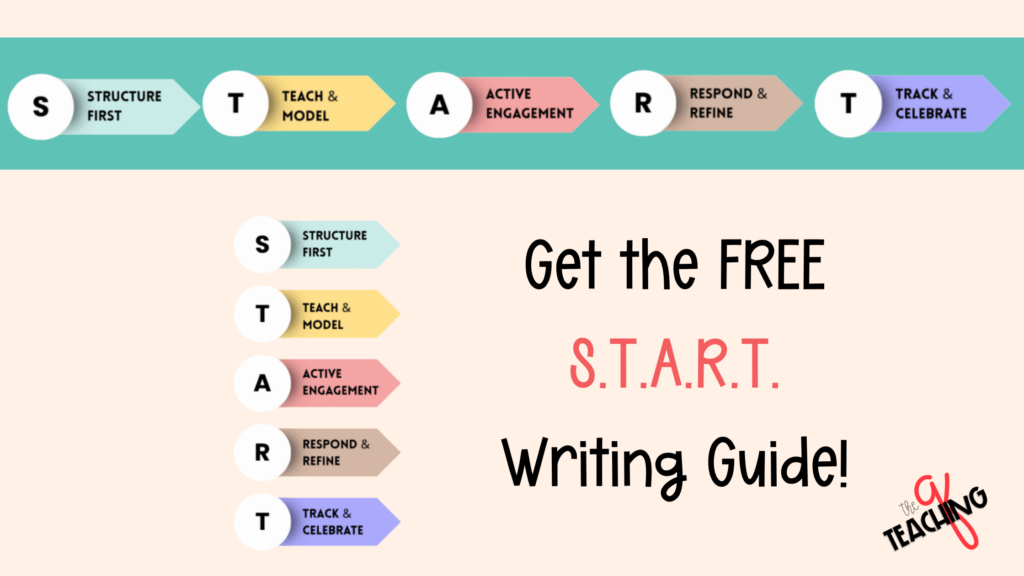
If you want a simple starting point, I created a free START Writing System guide for elementary teachers. It walks through:
- Structure First
- Teach & Model
- Active Engagement
- Respond & Refine
- Track & Celebrate
What’s Coming Next in This Series
In the next blog post, we’re going deeper into the “S” in START: Structure First and why writing structure is often the missing piece for struggling writers.
I’ll be breaking down:
- how I teach paragraph organization
- ways I make writing expectations clear
- what structure actually looks like during writing instruction
- and how small changes can help students feel more confident right away
Because once students understand how writing is organized, everything else starts to feel more manageable.