
“I have a dog.”
Period. Pencil down.
If this sounds familiar, it’s time to learn how to teach students to add details to sentences so they can turn those short, basic sentences into writing that actually gives their readers something to picture.
The good news? You don’t need a complicated writing lesson or hours of writing instruction.
Sometimes, all it takes is one simple sentence and a few strategic questions.
Many elementary students know how to write a complete sentence, but they don’t always know how to write stronger sentences by adding details. They need to learn that a complete sentence is just the starting point.
Let’s look at a simple strategy you can use to help your students become better sentence writers.
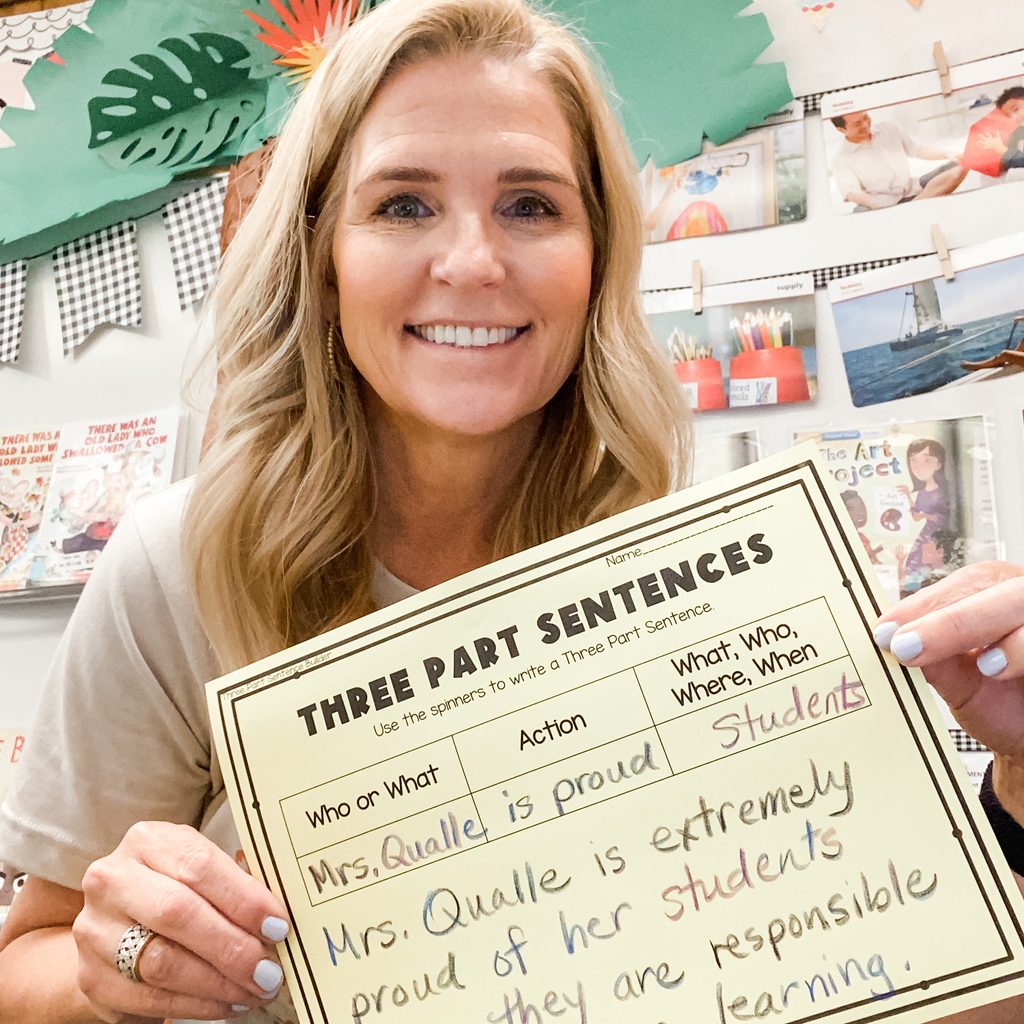
Begin with a sentence that is complete but doesn’t tell the reader very much.
For example:
I have a dog.
Ask your students:
“Is this a complete sentence?”
They’ll probably say yes.
And they’re right!
It has a subject and predicate, and it expresses a complete thought.
But now ask:
“Does this sentence give your reader a lot of information?”
That’s where the real teaching begins.
Explain that writers don’t just make sure their sentences are complete. Good writers add details to sentences to help their readers understand, visualize, and connect with their ideas.
This is how to teach students to add details to sentences:
A complete sentence isn’t always an interesting sentence.
That’s an important lesson for young writers.
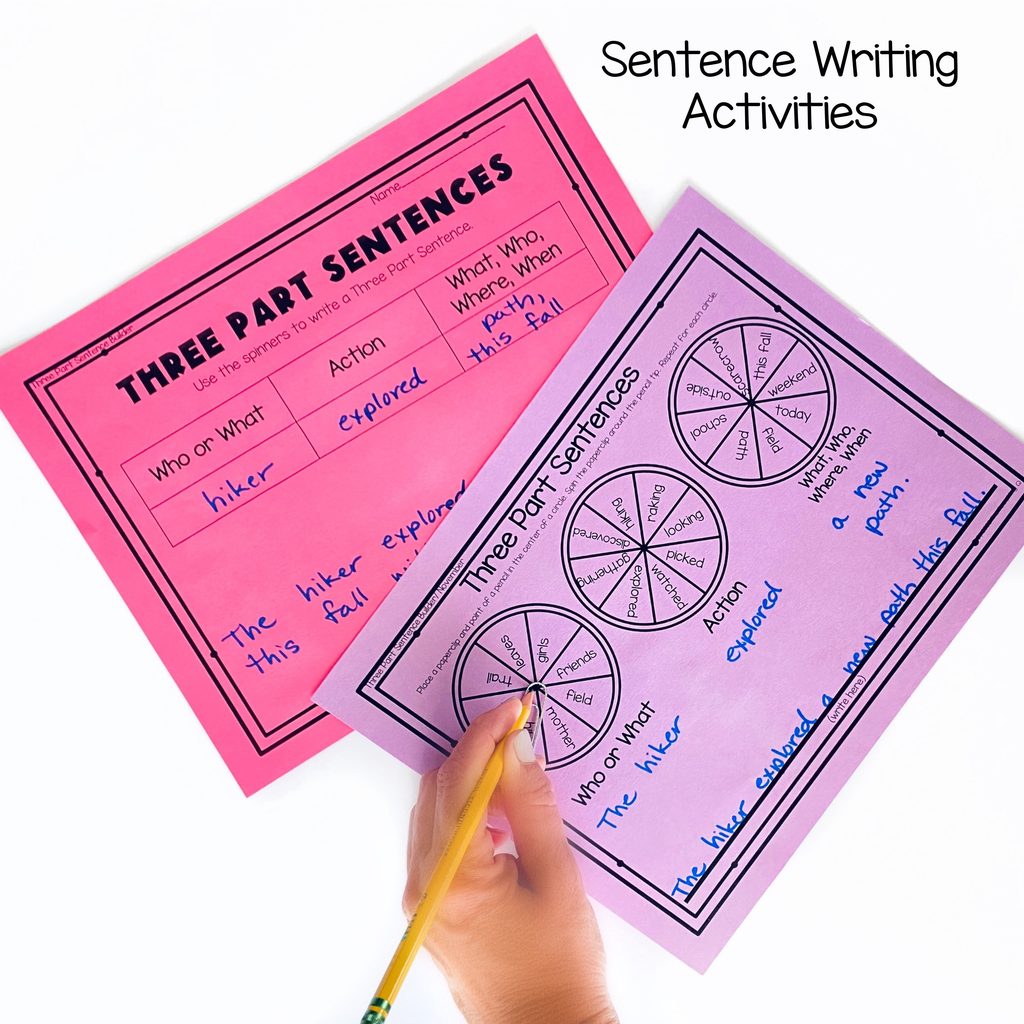
One of my favorite strategies for: how to teach students to add details to sentences is to give them a simple set of questions they can use whenever a sentence feels too short or basic.
Ask:
Let’s go back to our sentence:
I have a dog.
Now start asking questions.
Who has the dog?
I have a dog.
What kind of dog?
I have a fluffy golden retriever.
Where does the dog like to play?
I have a fluffy golden retriever who loves to play in my backyard.
When does the dog play?
I have a fluffy golden retriever who loves to play in my backyard after school.
Why is the dog special?
I have a fluffy golden retriever who loves to play in my backyard after school because he always makes me laugh.
Look at how much information we added to one simple sentence!
This is an easy sentence writing strategy for elementary students because it gives them specific questions to ask when they don’t know what else to write.
When you’re teaching students how to teach students to add details to sentences, resist the temptation to have them add five details at once.
Instead, model the process one step at a time.
Write:
I have a dog.
Then tell students:
“I’m going to make my sentence stronger by adding ONE detail.”
Add a describing word:
I have a fluffy dog.
Stop.
Read the sentence aloud.
Ask students:
“What did I add?”
Then add another detail:
I have a fluffy golden dog.
Then another:
I have a fluffy golden dog named Max.
And another:
I have a fluffy golden dog named Max who loves to chase squirrels.
Now students can see that adding details to a sentence doesn’t have to happen all at once.
Writers can start with a simple idea and build onto it.
This is especially helpful when teaching sentence writing in 2nd grade, because young writers often need to see exactly what the revision process looks and sounds like.
Sometimes the easiest way to teach how to write stronger sentences is to show students the difference between a basic sentence and a detailed sentence.
Put two sentences side by side.
I have a dog.
I have a playful golden retriever named Max who loves to chase squirrels in our backyard.
Ask:
“Which sentence helps you picture the dog?”
“Which sentence gives you more information?”
“What details did the writer add?”
This is also a great opportunity to remind students that strong writing isn’t about using the biggest or fanciest words.
Strong writing is about giving the reader information.
Try a few more examples.
I went to the park.
On Saturday morning, I rode my bike to the park with my sister and played on the swings.
I like pizza.
My favorite food is cheesy pepperoni pizza because I love the crispy crust and gooey cheese.
The dog ran.
The little brown dog raced across the grassy field to catch the bright red ball.
After comparing several examples, ask students:
“What else can you tell your reader?”
That question can become a powerful habit during elementary sentence writing practice.
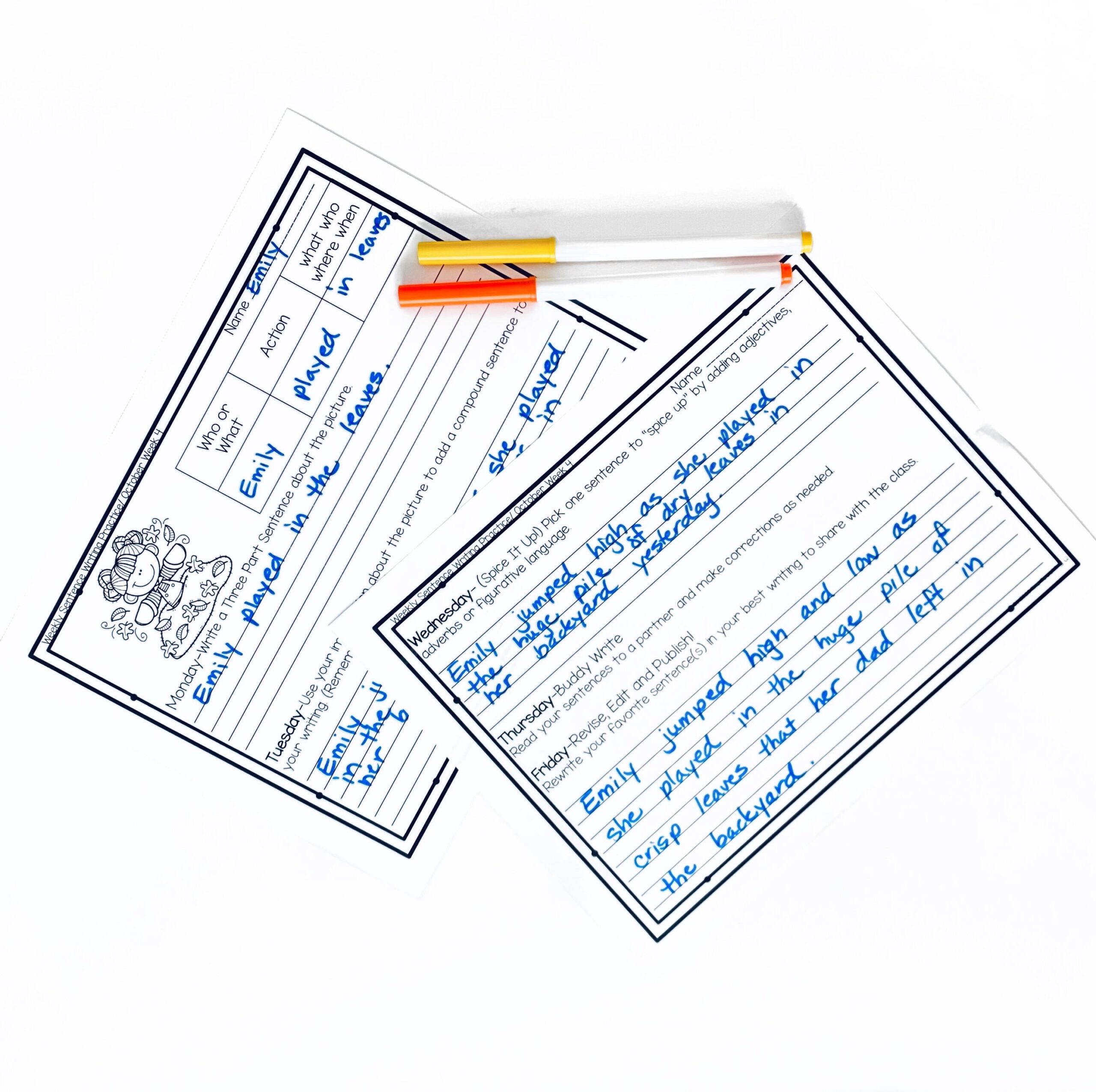
Now it’s time to move from teacher modeling to student practice.
Have students look through their own writing and find one sentence that could use more information.
You might say:
“Find one sentence that is complete but could tell your reader more.”
Then have students use the Who, What, Where, When, Why, and How questions to think about additional details.
They don’t need to rewrite an entire paragraph.
Just choose one sentence and make it stronger.
For example:
I went swimming.
On Saturday afternoon, I went swimming at my grandma’s pool with my cousins.
Then have students read their original and revised sentences to a partner.
Ask the partner:
“What new detail did the writer add?”
This keeps the focus on the writing skill instead of simply asking, “Do you like my sentence?”
If your students regularly write short, repetitive sentences, don’t wait for a big writing assignment to teach this skill.
Make sentence writing practice for elementary students part of your regular classroom routine.
Even five or ten minutes of focused practice can help students learn how to:
The goal isn’t for students to make every sentence long.
The goal is for students to understand when a sentence needs more information and how to add it.
Instead of automatically writing:
“I have a dog.”
We want students to begin thinking:
“What can I tell my reader about my dog?”
That’s the shift we’re looking for.
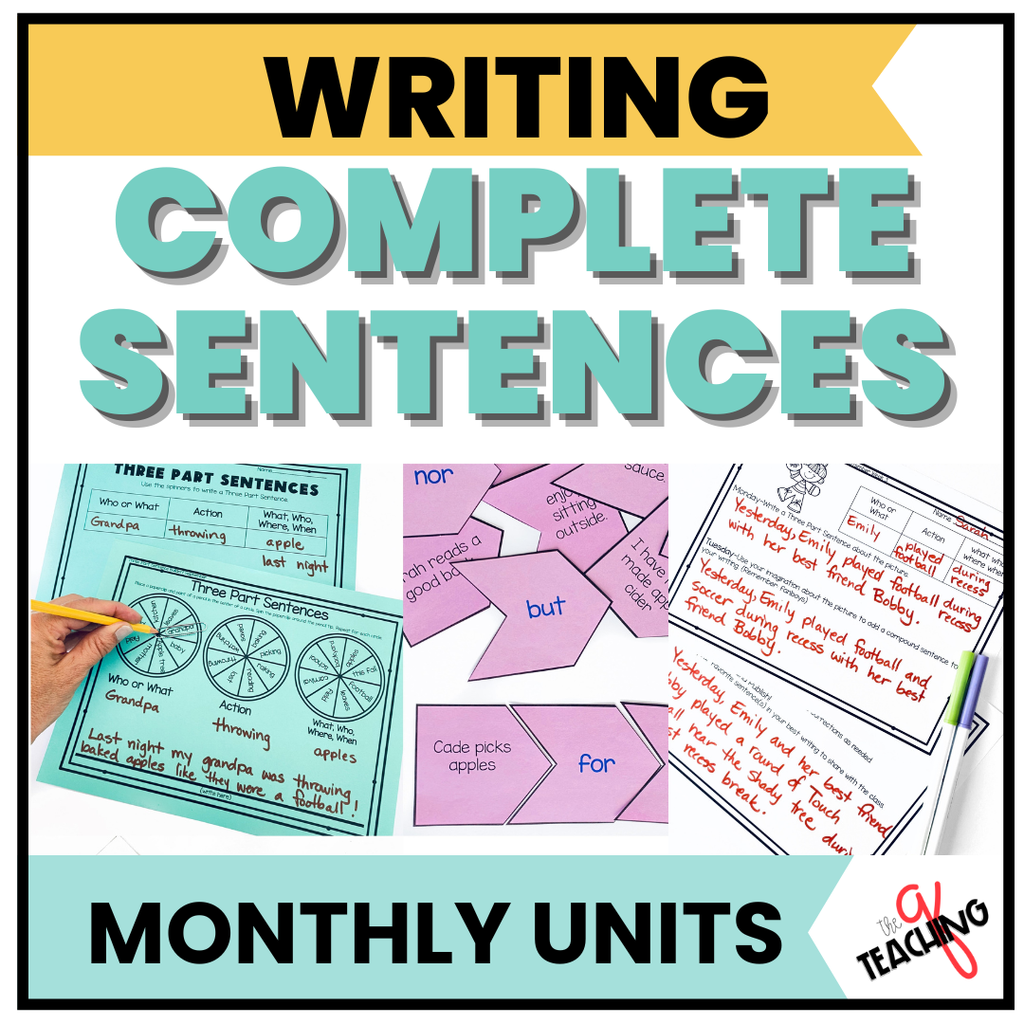
If you’re looking for sentence writing activities for 2nd grade or sentence writing activities for 3rd grade, having consistent practice can make a huge difference.
That’s why I created my Complete Sentence Writing Activities.
Each monthly resource provides structured, engaging sentence-writing practice that makes it easier to fit writing instruction into your busy school day.
You can purchase the Complete Sentence Writing Activities one month at a time, so you can choose the resources that fit your classroom and curriculum.
Or, if you want to have your sentence-writing instruction planned for the entire year, you can grab the Complete Sentence Writing Activities Full School Year Bundle and save compared to purchasing each resource individually.
It’s an easy way to take the “What am I going to have my students write today?” question off your plate while giving your students the repeated practice they need to become stronger writers.
Because when students learn that a sentence is just the beginning—not the end—they can turn those short, boring sentences into writing that actually tells their readers something.
Start with one simple sentence.
Ask a few questions.
Add one detail.
Then another.
And another.
Before long, that little sentence that used to end with “Pencil down!” can become a sentence that makes your reader want to keep reading.
And that’s the goal of teaching students to add details to their writing—not simply making sentences longer, but helping students become writers who have something to say and know how to say it.
Happy writing!
-Melissa |The Teaching Q