As teachers, we know that writing can sometimes feel like pulling teeth for our students. But with the right tools and guidance, writing doesn’t have to be a dreaded task. Using writing prompts for elementary students not only speeds up creativity but also helps build structure, confidence, and essential writing skills.
Today, I’m sharing practical tips, classroom strategies, and some of my favorite resources to make paragraph writing easier and more engaging for your students.
Why Use Writing Prompts in Elementary Classrooms?
Writing prompts are powerful because they:
- Eliminate the stress of “What do I write about?”
- Provide focus and direction.
- Encourage creativity and critical thinking.
- Help students practice narrative, opinion, and informative writing in small, manageable chunks.
When you combine writing prompts with structured support, you give your students the tools they need to become confident, capable writers.
Step 1: Introduce the Prompt Clearly
One of the most important steps in teaching writing is clarity. Elementary students often need prompts broken down into manageable pieces. For example, in the resource Paragraph of the Week Writing Prompts, students are guided through each step of writing with carefully structured prompts and directions.
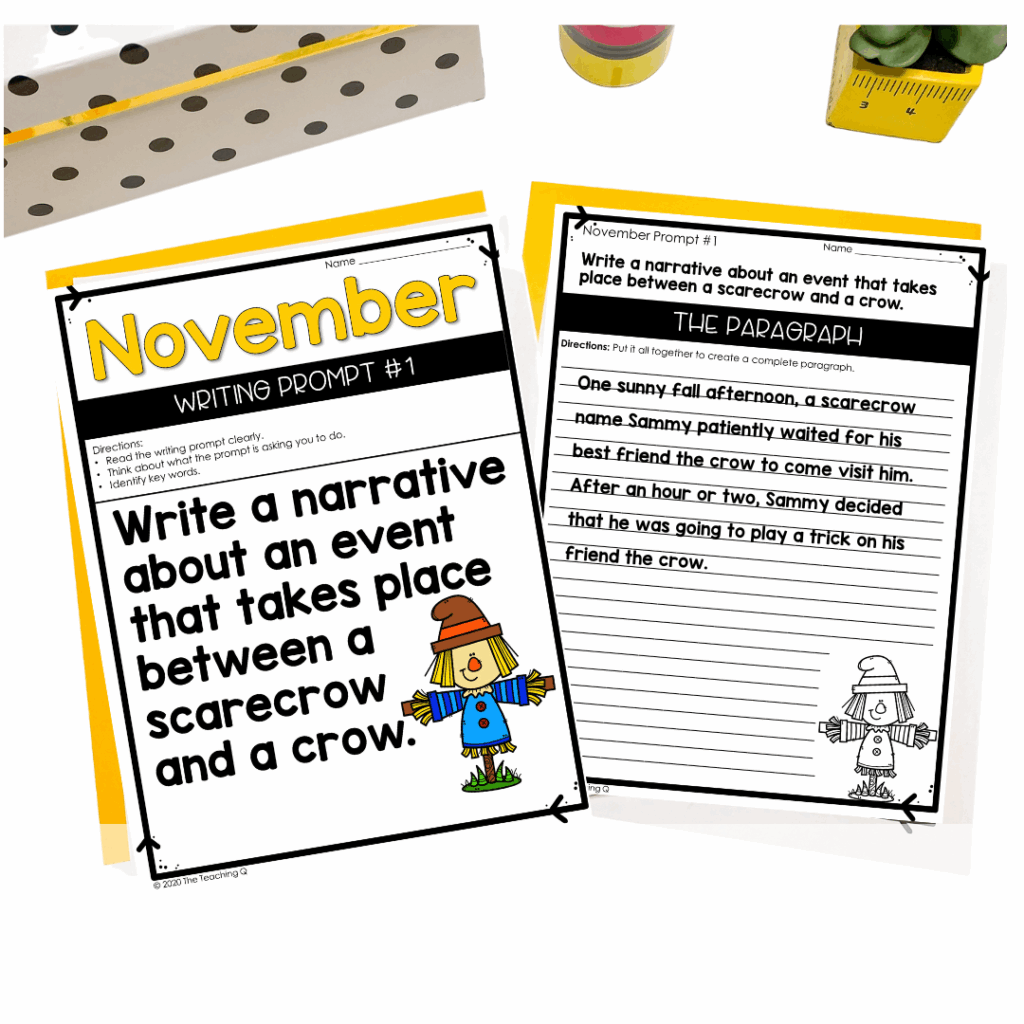
A good rule of thumb: Read the prompt together, highlight the key words, and talk through what it’s asking. Using visuals (like the scarecrow and crow prompt shown above) makes the activity more engaging and helps students picture what they want to write about.
Step 2: Brainstorm Together
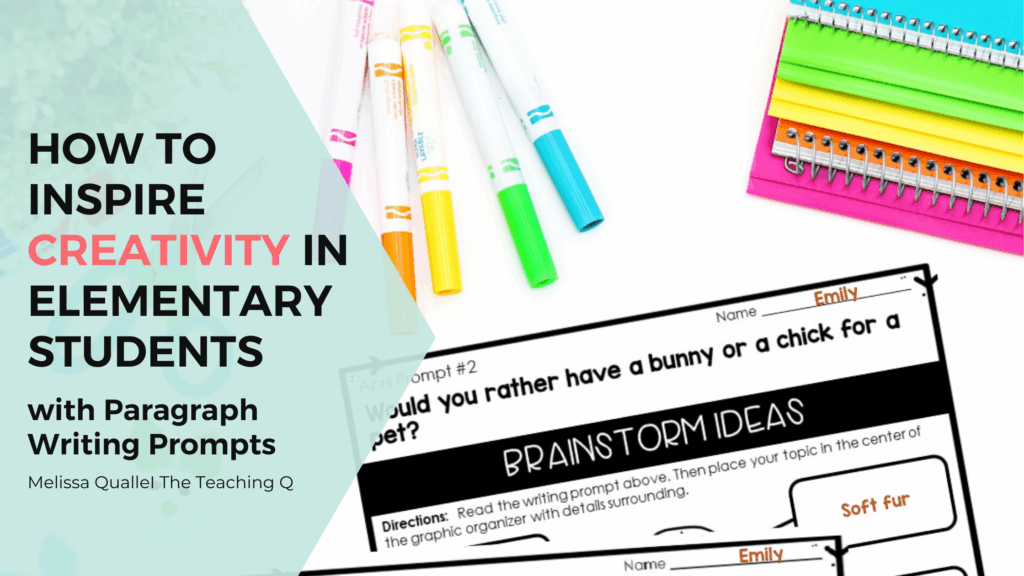
Before students start writing, set aside time for brainstorming. Younger writers especially need opportunities to generate and organize their ideas. A few brainstorming strategies include:
- Word Webs: Write the main idea in the center and branch out with details.
- Draw First: Encourage students to sketch their ideas before writing.
- Think-Pair-Share: Let students talk out their ideas with a partner before putting pencil to paper.
This stage not only builds confidence but also ensures that students have something to write about when they sit down to compose.
After students brainstorm, they’re ready to start shaping their ideas into a paragraph. This is where structured paragraph writing prompts really shine. In fact, resources like the Paragraph of the Week Writing Prompts are designed to guide students through the process step by step.
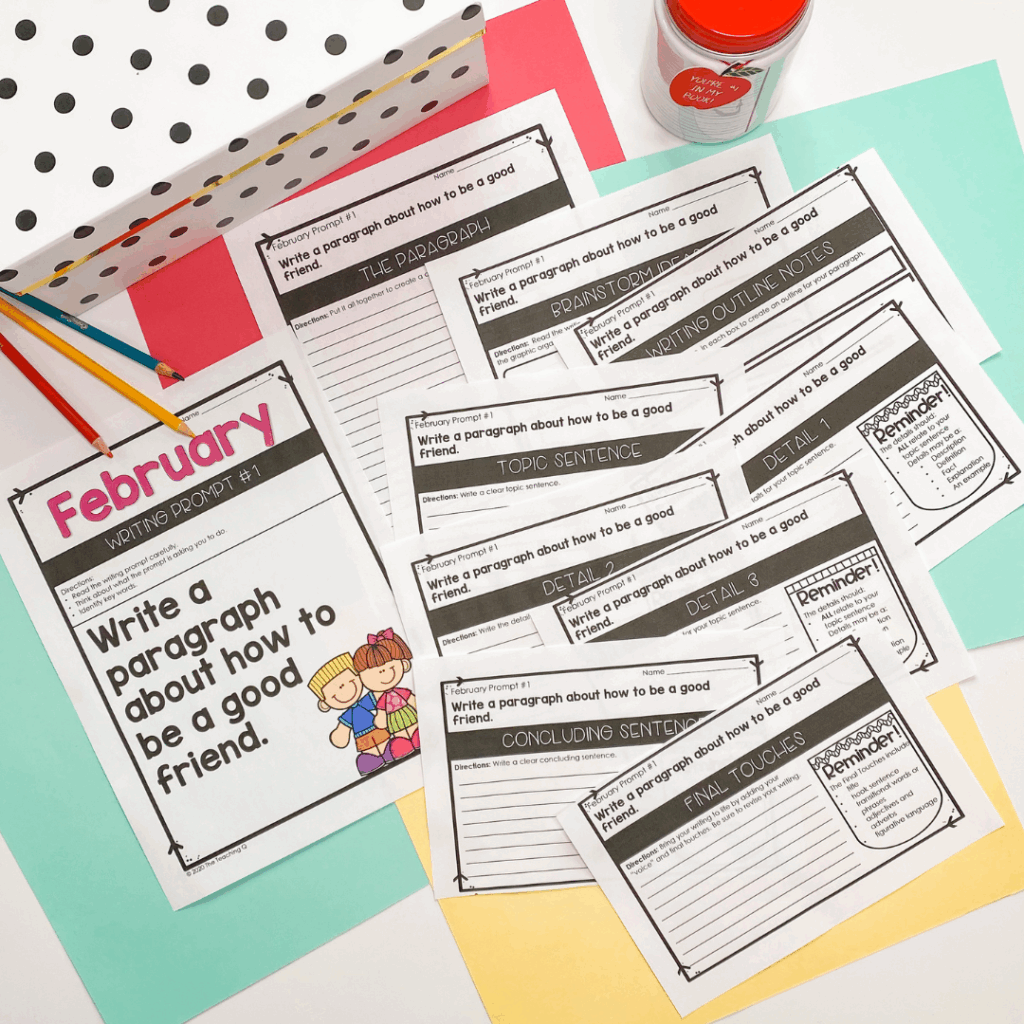
Each day of the week focuses on a small, manageable task, such as brainstorming, writing a topic sentence, adding details, and concluding with a conclusion. By Friday, students have built a complete paragraph, and along the way, they’ve gained confidence in their ability to organize and express their ideas.
Step 3: Use a Structured Writing Framework
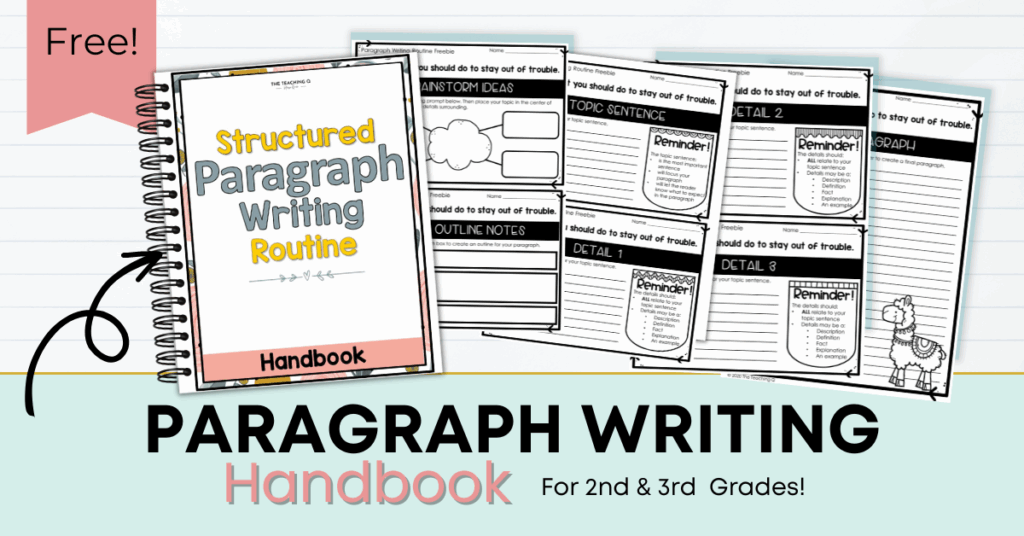
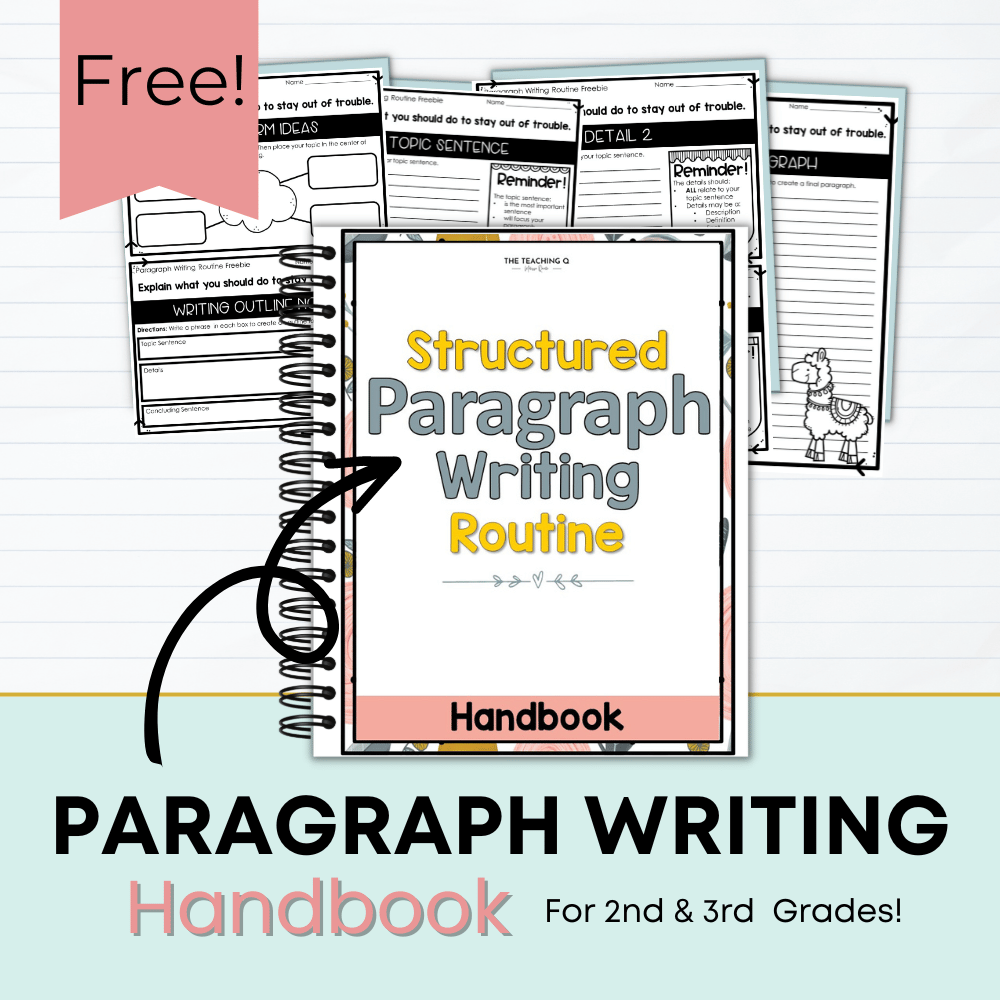
The beauty of paragraph writing prompts is that they give students direction, and pairing them with a structured framework takes away the guesswork. The free resource Structured Paragraph Writing Handbook & Printable, is perfect for this. It includes a teacher handbook and one full week of structured activities, which walk students step-by-step through crafting a complete paragraph.
This framework ensures that every student knows:
- How to write a topic sentence.
- How to add details and explanations.
- How to wrap up their paragraph with a conclusion.
With this structure, students learn the process of building a strong paragraph from start to finish.
Step 4: Model the Writing Process
Kids learn best when they can see it in action. Take five minutes to model writing a paragraph on the board using the same prompt your students will work on. Think aloud as you go:
- “Hmm, what should my topic sentence be?”
- “I want to make sure I add details that explain my ideas.”
- “How can I end this so it wraps up my paragraph nicely?”
By modeling, you show students exactly how a prompt grows into a well-formed paragraph.
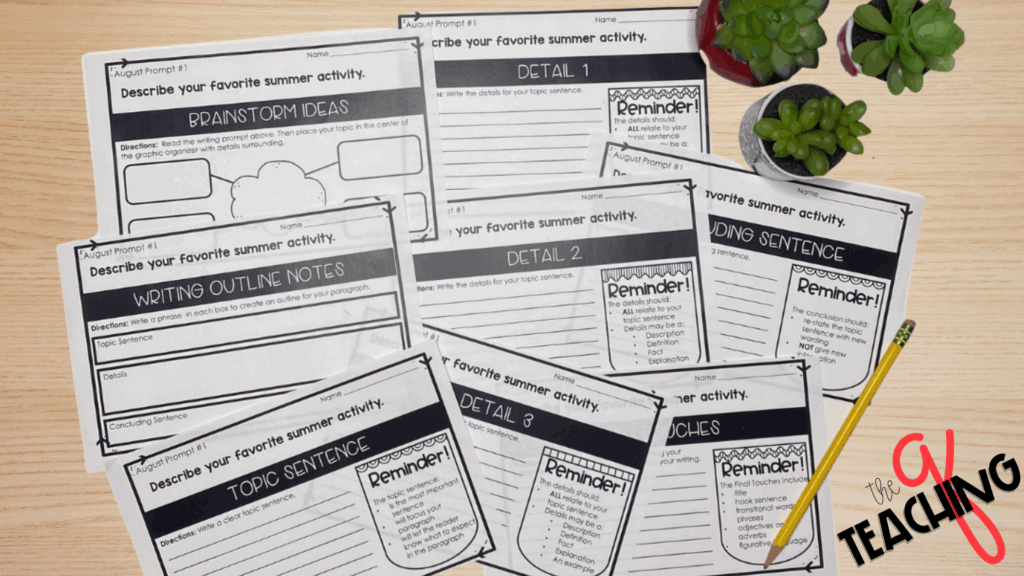
Step 5: Scaffold and Support
Not all students will be at the same place in their writing journey, and that’s okay! Differentiation is key. Here are a few ways you can scaffold:
- Provide sentence starters for struggling writers.
- Allow advanced writers to add extra details or write multiple paragraphs.
- Use graphic organizers for students who need more structure.
The Paragraph of the Week Writing Prompts Practice Worksheets do a wonderful job of offering built-in scaffolds so that all students can experience success, regardless of their writing level.
Step 6: Encourage Revision and Editing
It’s important for students to see that writing is a process. After drafting, walk students through simple editing steps:
- Did I answer the prompt?
- Did I write in complete sentences?
- Did I include a beginning, middle, and end?
- Can I add one more detail to make my writing stronger?
A great way to strengthen this process is through sentence expansion activities. In this blog post, Sentence Expansion for Better Writing, you’ll find practical tips for teaching students how to expand their sentences with details, making their paragraphs richer and more engaging. Research also supports this approach, according to Reading Rockets, explicit instruction in sentence construction and expansion significantly improves students’ overall writing quality.
Step 7: Celebrate Student Writing
Don’t forget this final step… celebrating! Sharing writing in class builds confidence and helps students value their own voice. You can:
- Have an “Author’s Chair” where students read their paragraphs aloud.
- Display paragraphs on a bulletin board.
- Create a class book of writing samples.
These little moments of celebration motivate students to keep improving and enjoy the writing process.
Seasonal Writing Prompts Keep Students Engaged
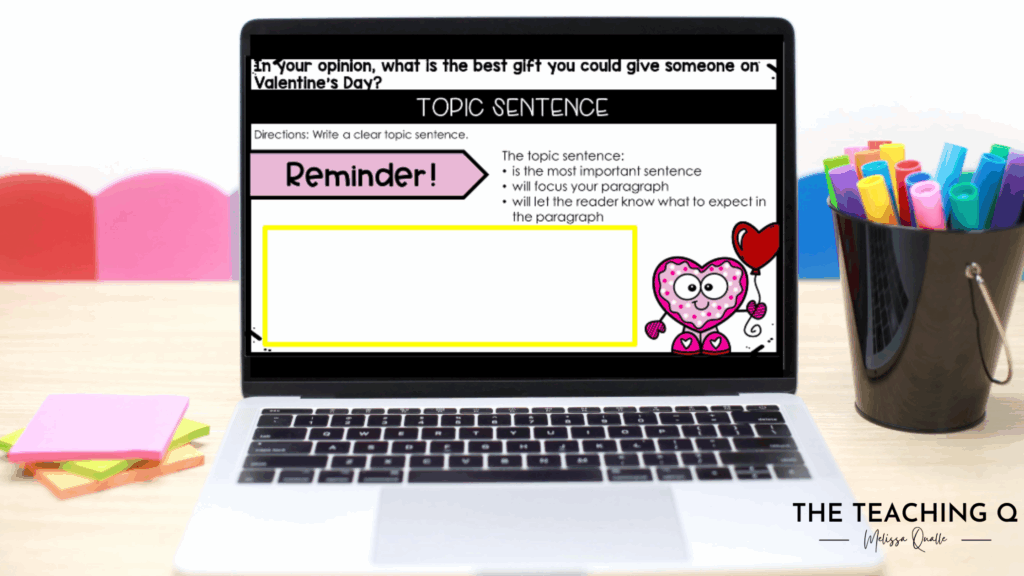
One of the best parts of the Paragraph of the Week Writing Prompts Practice Worksheets is that they are seasonal. In November, students might write about scarecrows and crows, while in February, they may explore what it means to be a good friend. Seasonal paragraph writing prompts tap into what’s happening in the world around them, making writing more relatable and fun.
When writing aligns with holidays, weather changes, or character-building themes, students are naturally more invested in the process. This makes paragraph writing not just a skill-building activity, but a way to celebrate the seasons together in your classroom.
Bringing It All Together
Using paragraph writing prompts alongside structured supports transforms writing from an overwhelming task into a manageable, rewarding activity. The key is breaking down the steps, modeling the process, and giving students the tools they need to succeed.
Here’s a quick recap of the steps:
- Introduce the prompt clearly.
- Brainstorm ideas together.
- Use a structured framework.
- Model the writing process.
- Scaffold and support.
- Encourage revision and editing.
- Celebrate student writing.
- Keep things fresh with seasonal themes.
With resources like the Paragraph of the Week Writing Prompts Practice Worksheets and the FREE Structured Paragraph Writing Handbook & Printable, you’ll have everything you need to guide your students to success.
I know from experience how challenging it can be to fit everything into the day. But giving your students structured, engaging opportunities to write pays off in the long run. With the right paragraph writing prompts and tools, even your most reluctant writers can become confident storytellers.