Earth Day in the classroom always starts the same way.
Someone says, “We should recycle.”
Another student adds, “Don’t litter.”
And just like that, the conversation kind of… stops there.
They’re not wrong.
They’re just not thinking very deeply yet.
That’s what made me rethink how I approach Earth Day activities.
Because if we want students to actually understand why this day matters, we have to go beyond quick answers and give them space to slow down, think, and explain their ideas.
That’s where writing comes in.
Start With Thinking, Not Writing
Before students ever begin writing, they need time to process their ideas.
One of the biggest shifts I made was starting with thinking first.
I like to begin with a simple question:
“What are ways people can help the Earth?”
Then I let students do a quick brain dump.
No pressure. No complete sentences. Just ideas.
You’ll see things like:
- Pick up trash
- Save water
- Recycle
- Plant trees
This step builds confidence right away. Students realize they do have ideas, they just need help organizing them.
Simple Earth Day Activities That Lead to Better Writing
Once students have their ideas down, the next step is helping them make sense of them.
Instead of jumping straight into writing, I guide students to group their ideas into categories like:
- Reducing waste
- Protecting nature
- Saving resources
Now their thinking has structure.
Another thing that helps is adding a quick hands-on activity before writing.
You can try:
- A short campus clean-up walk
- Sorting items into recycle vs. trash
- Creating a class anchor chart
These simple Earth Day activities give students something real to pull from when they write.
Turn Ideas Into Meaningful Writing
Once students have ideas and experiences to pull from, that’s when writing becomes more meaningful.
Instead of just asking students to “write about Earth Day,” I guide them toward writing that helps them explain their thinking.
Some simple writing directions include:
- Informative writing:
How can we help protect the Earth? - Opinion writing:
What is the most important way to take care of the planet? - Cause and effect:
What happens if we don’t take care of the Earth?
These types of activities push students beyond short answers and into real explanation.
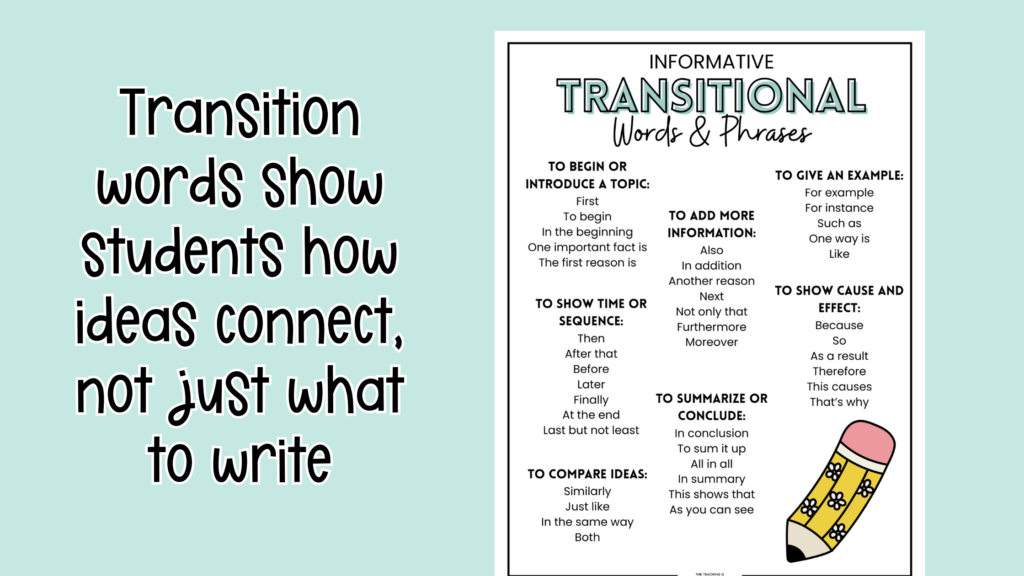
Keep the Structure Clear and Predictable
Even with strong ideas, students still need structure.
Without it, writing can feel scattered or incomplete.
I keep things simple and consistent:
- Start with a clear topic
- Add 2–3 main ideas
- Explain each idea
- End with a simple conclusion
I also model my thinking out loud.
For example:
“I want to write about recycling. First, I need to explain what it is. Then I can give an example.”
This helps students see the process instead of guessing their way through it.
If you want to build this kind of structure across your writing block, this post is a great place to start:
Organize Your Writing Activities!
Support All Writers Without Overcomplicating It
Not every student is going to approach writing the same way.
That’s why flexibility matters.
Some students are ready to write full paragraphs, while others need more support.
You can adjust by:
- Letting students list ideas before writing
- Providing sentence starters
- Allowing drawing + writing
- Offering shorter response options
Small changes like this make writing more accessible for everyone.
If you want more ideas on this, this post is really helpful:
Differentiate Writing Instruction
What Students Start to Understand Through This Work
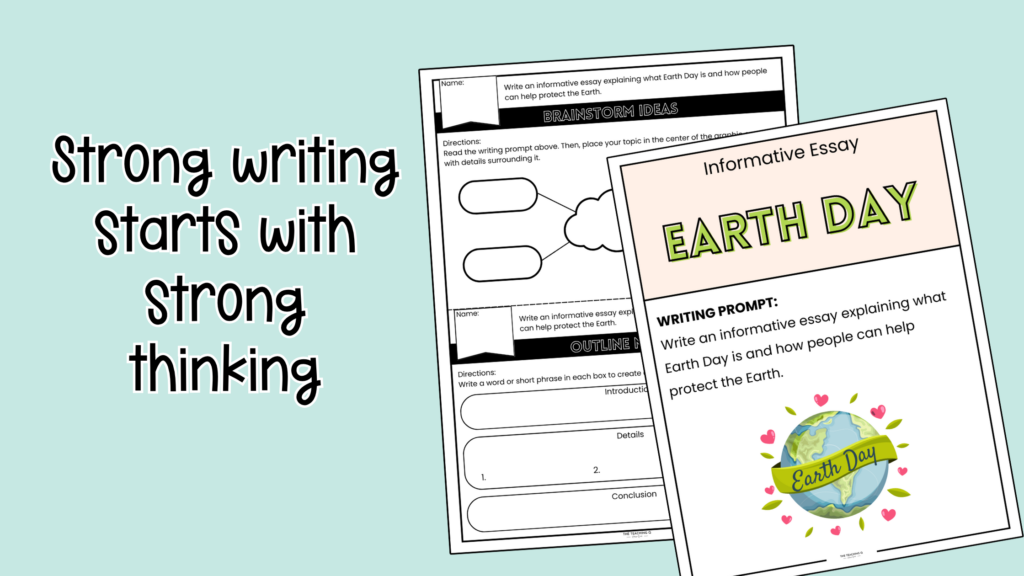
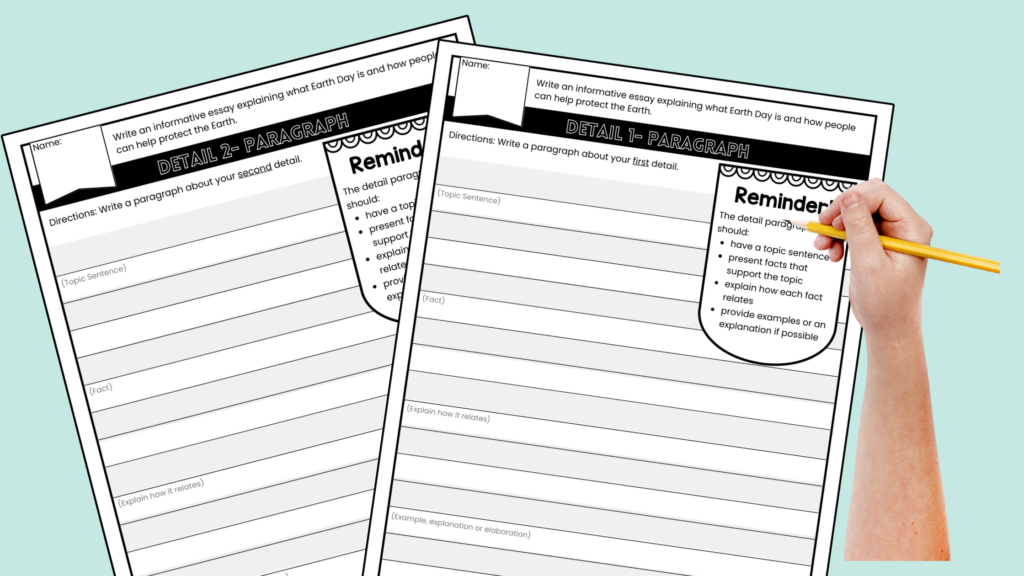
Something I didn’t expect at first was how much deeper students started to think once they had the writing pages in front of them.
At the beginning, their ideas are usually simple.
But as they work through each part of the Earth Day writing resource, something starts to shift.
Because they’re not just given one blank page.
They’re guided through it.
When students move from the brainstorming page into the first paragraph, they begin to realize that writing isn’t just about getting something down. It’s about explaining what they mean.
Then as they continue into the next sections, they naturally start to:
- Add more to their ideas
- Explain their thinking more clearly
- Go back and fix parts that don’t make sense
The structure of the pages does a lot of that work for you. It nudges them forward without you having to constantly step in.
Why the Structure in This Resource Matters
One of the biggest challenges with writing is that students don’t know how to move from one part to the next.
That’s where this resource really helps.
Instead of everything being on one page, each part is broken down so students can focus on one step at a time.
They can clearly see:
- Where their ideas go
- What they should be working on next
- How each part connects to the whole piece
And because the expectations are built right into the pages, you don’t have to repeat directions over and over.
You’re not saying:
“Add more.”
“Explain that.”
“Keep going.”
The structure is already doing that.
Which frees you up to actually listen to what they’re writing and help them improve it.
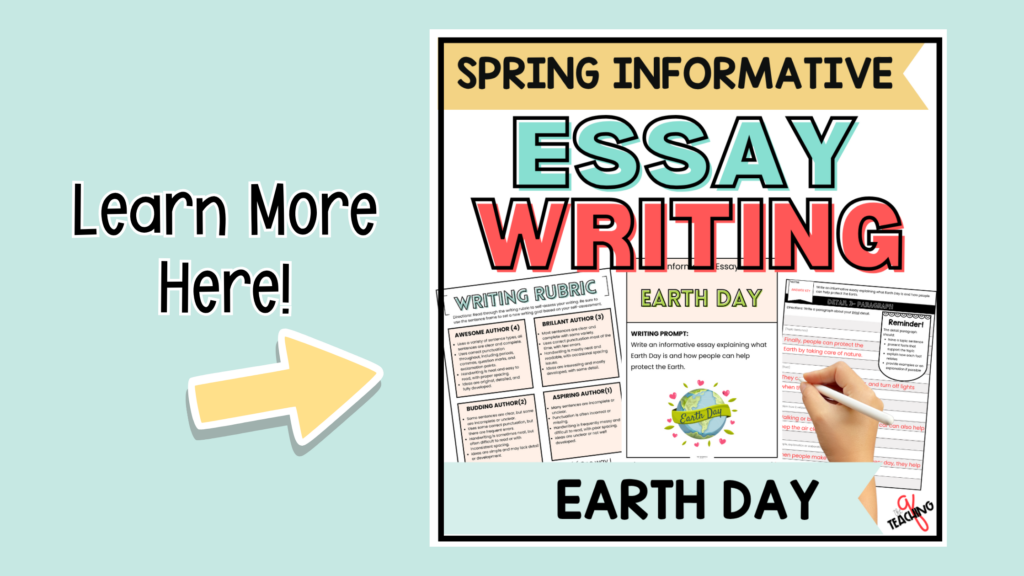
If you want to take a closer look at how it’s set up, you can find it in the image below.
What This Looks Like Across Your Writing Block
One thing I really like about using something like this during Earth Day activities is that it doesn’t stay isolated to just one lesson.
The structure students are using here carries over into everything else you’re teaching.
When students move through the resource, they’re not just writing about Earth Day. They’re practicing skills they’ll use again and again.
They start to recognize:
- How to move from brainstorming into writing
- How to build a paragraph one step at a time
- How to go back and improve their work instead of stopping at a first draft
And because they’ve seen that process clearly laid out, it becomes more familiar the next time they write.
You’ll notice it in other assignments.
Students begin to:
- Organize their ideas more quickly
- Add details without as much prompting
- Stay focused on one main idea
That consistency is what really makes a difference.
The resource supports that by giving students a repeatable structure they can rely on, not just for this topic, but for writing in general.
My Final Thoughts on Earth Day Activities
If I’m being honest, Earth Day used to feel like just another themed lesson.
But once I started slowing it down and adding more structure, it became something more.
Students weren’t just sharing quick ideas anymore. They were thinking through their writing, building on their ideas, and actually finishing complete pieces.
Having a resource that guides each step made a big difference. It gave students a clear path to follow and helped me spend less time repeating directions and more time supporting their thinking.
If you’re planning your Earth Day activities, remember this resource as a simple way to support your students through the full writing process:
Earth Day Spring Informative Writing Prompt
And if you want to carry that same structure across the entire year, remember this one as well for seasonal writing support:
Holiday Informative Opinion Narrative Essay Writing
Because in the end, it’s not just about the activity. It’s about helping students turn their ideas into something clear and meaningful.