You can usually spot the moment a student gets overwhelmed during their writing structure time.
They stop.
They stare at the page for a while.
Then the questions start rolling in one after another.
“What do I write next?”
“How many sentences do I need?”
“Is this enough?”
“I don’t know what to say.”
A lot of times, the problem is not the idea.
It’s the structure.
Once I started paying attention to that, my entire writing block started making more sense.
Some students had incredible ideas but couldn’t organize them. Others knew exactly what they wanted to say out loud but completely shut down once it was time to write independently.
That’s actually one of the biggest reasons I created the START Writing System.
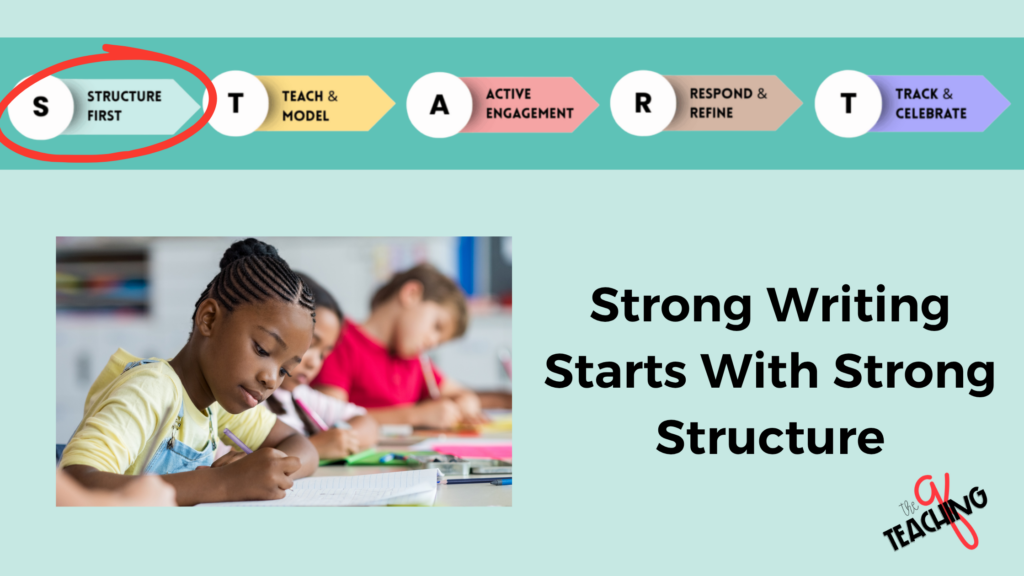
I realized students needed a clearer path through the writing process, which is why START begins with Structure First.
Because before students can become confident writers, they need to understand how writing is organized in the first place.
That shift changed everything in my classroom.
What Writing Structure for Elementary Students Actually Means
Maybe you’re wondering what I even mean by “writing structure.”
What does that actually look like in an elementary classroom?
And honestly, that’s a fair question because structure can sound overly rigid at first.
But strong writing structure for elementary students is not about forcing students into identical responses or making writing feel formulaic.
It’s about giving students a clear path through the writing process.
Let’s start with what structure actually helps students understand:
- how to begin
- where ideas belong
- how writing is organized
- what comes next in the process
Without structure, writing can feel huge to students.
Especially struggling writers.
They’re trying to:
- think of ideas
- remember spelling
- organize sentences
- use punctuation
- stay on topic
- and figure out what the teacher wants all at the same time
That’s a lot.
Structure lowers the overwhelm by giving students something they can rely on while they’re learning how writing works.
And honestly, once I started adding more structure into my writing instruction, students became far more willing to write independently.
How to Build Strong Writing Structure in Real Classrooms
Writing structure does not have to be complicated.
Some of the biggest changes in my classroom came from small supports.
Things like:
- sentence starters
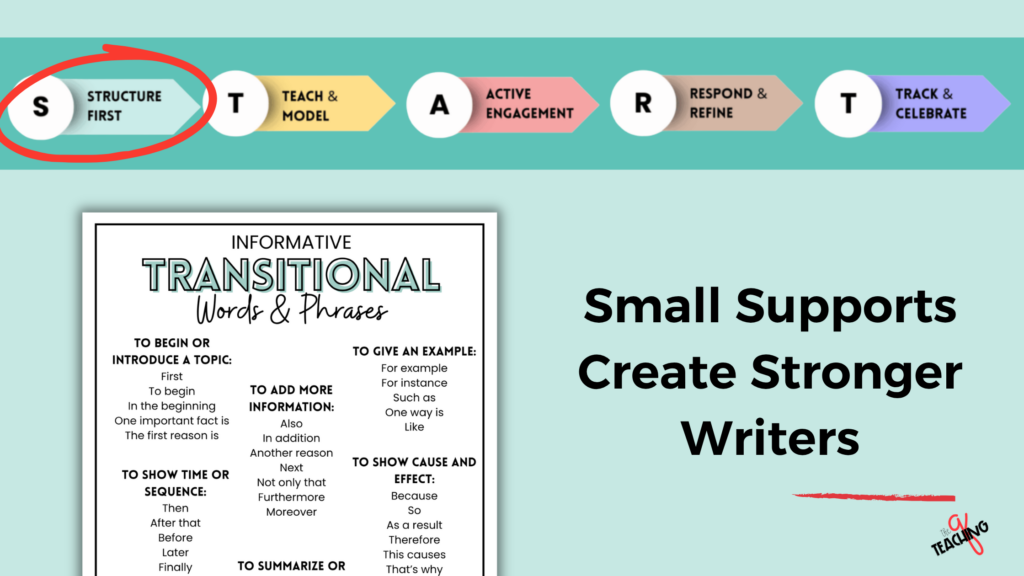
- transition word banks
- color-coded paragraphs
- modeled examples
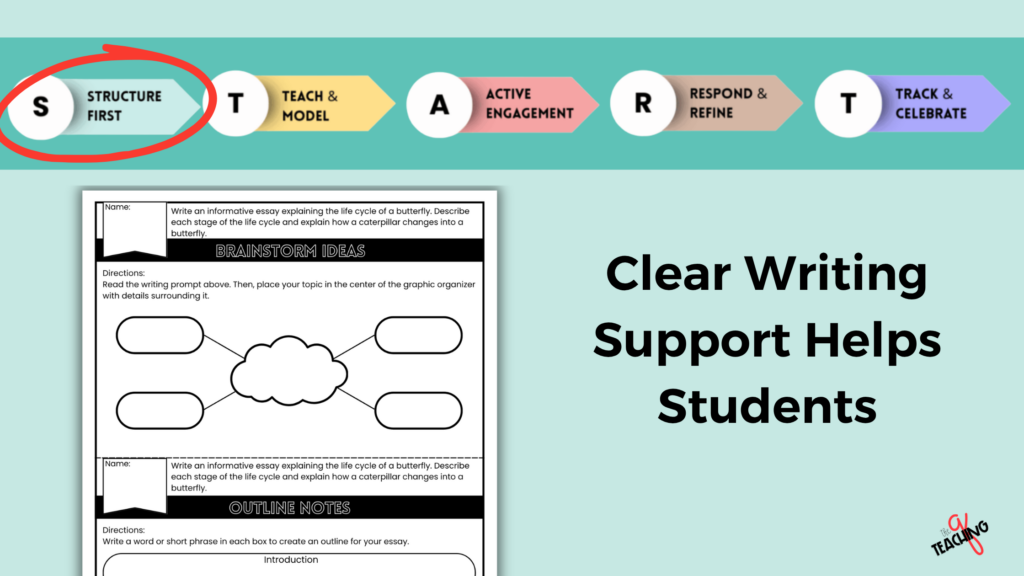
- graphic organizers
- guided brainstorming
- prompts directly on student pages
Those supports help students focus more energy on their ideas instead of trying to figure out the format.
And honestly, I started noticing students writing longer responses almost immediately once they had more support built into the process.
This is also why I started creating more structured writing pages and scaffolds inside my own resources.
Not to make writing easier.
To make writing more manageable.
There’s a huge difference.
Small Writing Supports Make a Bigger Difference Than We Think
One thing I’ve learned over the years is that students usually do not need giant changes to become stronger writers.
Most of the time, they need smaller supports that consistently guide them through the process.
Sometimes that looks like:
- sentence stems
- transition word reminders
- visual paragraph models
- brainstorming boxes
- color coding
- checklists students can actually understand
Those supports may seem simple, but they give students something to rely on while they’re learning how writing works.
Once I started adding more of those supports into my writing instruction, I noticed students becoming much more willing to take risks during writing.
Instead of freezing when they got stuck, they had tools they could go back to independently.
That shift matters because students start building confidence little by little instead of feeling overwhelmed the second writing begins.
How I Build Writing Structure Into My Writing Block
Inside my writing block, structure shows up everywhere.
Students see:
- modeled paragraphs
- anchor charts
- sentence stems
- guided examples
- checklists
- visual organization tools
We talk through ideas before writing.
Practice building sentences together.
We revisit the same writing expectations consistently instead of changing everything every week.
That consistency helps students feel more successful because the process becomes familiar.
If you want to dive deeper into overall writing instruction, this post connects really well here:
https://theteachingq.com/how-to-teach-writing-to-elementary-students/
And if you’re looking for ways to strengthen writing habits over time, this post pairs naturally with structure work too:
https://theteachingq.com/powerful-writing-skills-practice-to-elevate-instruction/
Why Structure Became the First Step in START
This is exactly why I started with Structure First inside the START Writing System.
Before students can confidently:
- revise
- elaborate
- strengthen ideas
- write independently
They need to understand how writing is organized in the first place.
That’s why, in my START Writing System, we always begin with structure.
Not because I want writing to feel rigid.
But because students need a clear path before they can confidently work independently.
When students understand:
- where ideas belong
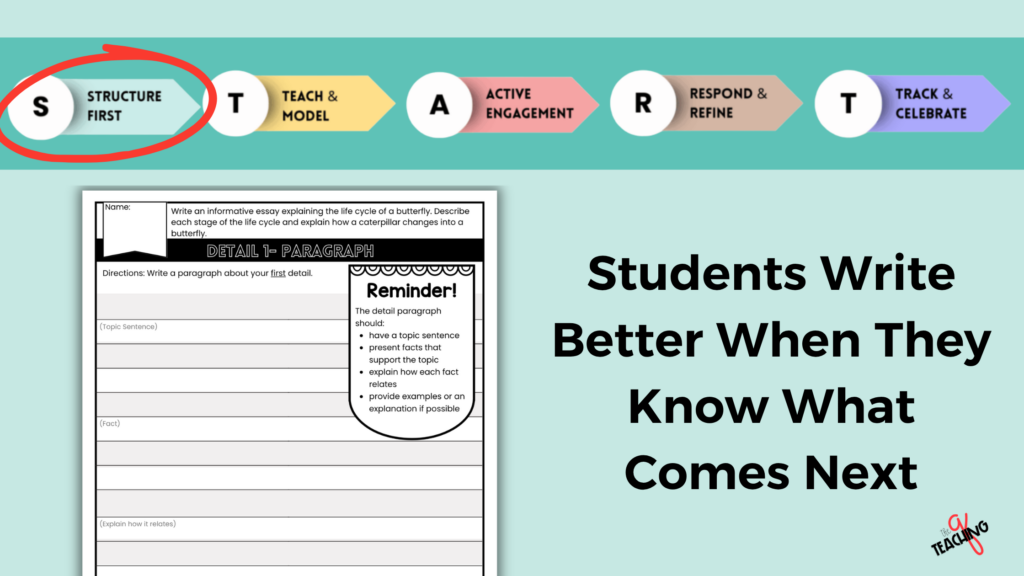
- how paragraphs are organized
- what comes next in the writing process
Everything else starts feeling more manageable.
That’s also why structure is built into every part of my writing instruction through:
- modeled examples
- guided organization
- sentence stems
- paragraph frameworks
- visual supports
- consistent routines
Students need repeated opportunities to see:
- how writing flows
- how ideas connect
- how strong writing is organized
Once that foundation is there, everything else becomes easier to teach.
Common Writing Structure Mistakes and How I Support Them
Writing One Strong Sentence… Then Stopping
This is probably one of the most common things I see during writing instruction.
A student writes one really good sentence… and then they completely freeze.
Usually, it’s not because they’re done.
They just are not sure where to go next.
This is where sentence stems, transition words, and modeled examples help so much.
I like to model what it looks like to expand an idea instead of simply telling students:
“Add more.”
We practice adding:
- examples
- details
- explanations
- connections
together before students try it independently.
A lot of times students simply need to SEE what extending writing looks like first.
Jumping Between Ideas Without Organization
This is where brainstorming webs and paragraph organizers become really important.
Before students begin drafting, I like to slow down and organize ideas together as a class first.
I usually follow:
- I do
- We do
- You do
so students can see the thinking process modeled before trying it independently.
Sometimes we:
- sort details together
- color code ideas
- organize examples into sections
- highlight where transitions belong
Those small supports help students understand how writing flows instead of feeling like random thoughts on paper.
Students Struggling to Start Writing
Blank pages can feel overwhelming for a lot of students.
This is why I almost always give students some type of starting point.
That might look like:
- sentence starters
- brainstorming boxes
- guided prompts
- verbal brainstorming before writing
Once students have a way into the assignment, they usually become much more willing to keep going.
And honestly, this is one of the biggest reasons I believe structure matters so much.
Students often do not need harder assignments.
They need clearer entry points.
Students Rushing Through Writing
You know those students who finish in three minutes and somehow have two sentences total?
Usually, they are trying to complete the task instead of fully developing their ideas.
One thing that helps a lot is modeling what a complete response actually looks like.
We compare:
- short responses
- expanded responses
- detailed explanations
and talk about why one feels stronger than the other.
That visual comparison helps students understand expectations much more clearly than simply saying:
“Write more.”
How the 8-Week Writing Cycle Supports Writing Structure for Elementary Students
One of the hardest parts about teaching writing is feeling like you are constantly restarting.
New expectations.
That can make writing instruction feel exhausting for both teachers and students.
That’s a huge reason I created the 8-Week Writing Cycle.
I wanted students to have consistent writing routines that they could build on week after week instead of relearning the process every time we started a new assignment.
The writing cycle helps organize:
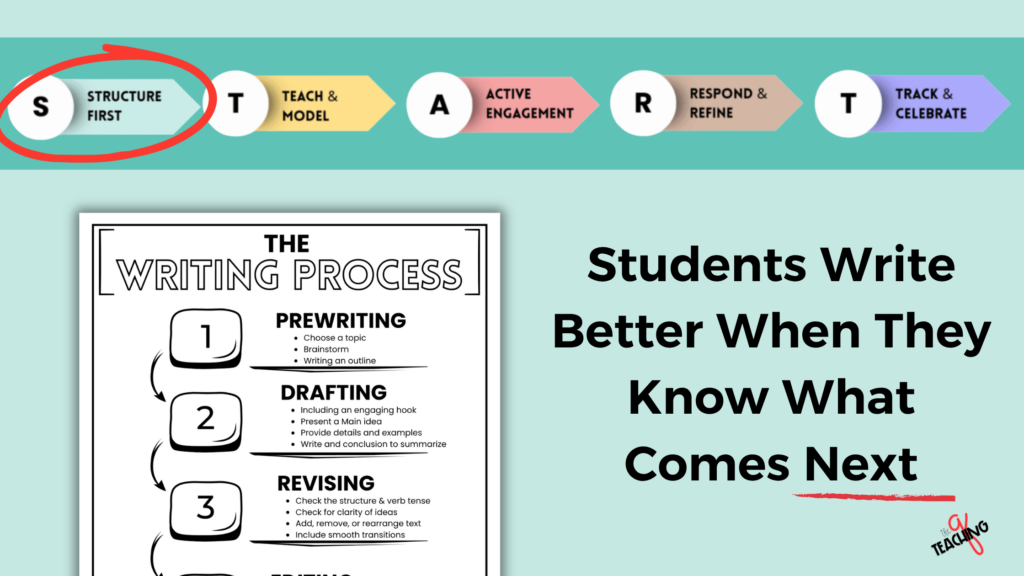
- brainstorming
- paragraph structure
- modeling
- drafting
- revision
- writing expectations
into a system that feels much more connected.
Because when students already understand the structure, they can spend more energy actually becoming stronger writers.
If you want to take a closer look at the writing cycle, you can find it here: 8 Week Writing Cycle
Free START Writing System for Elementary Teachers
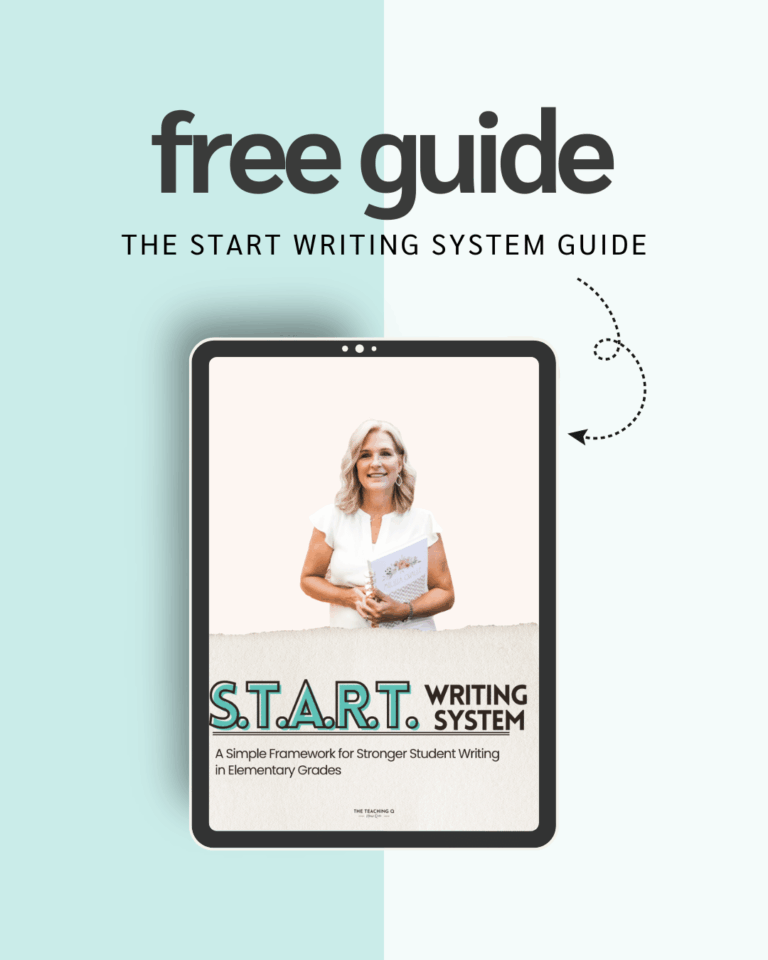
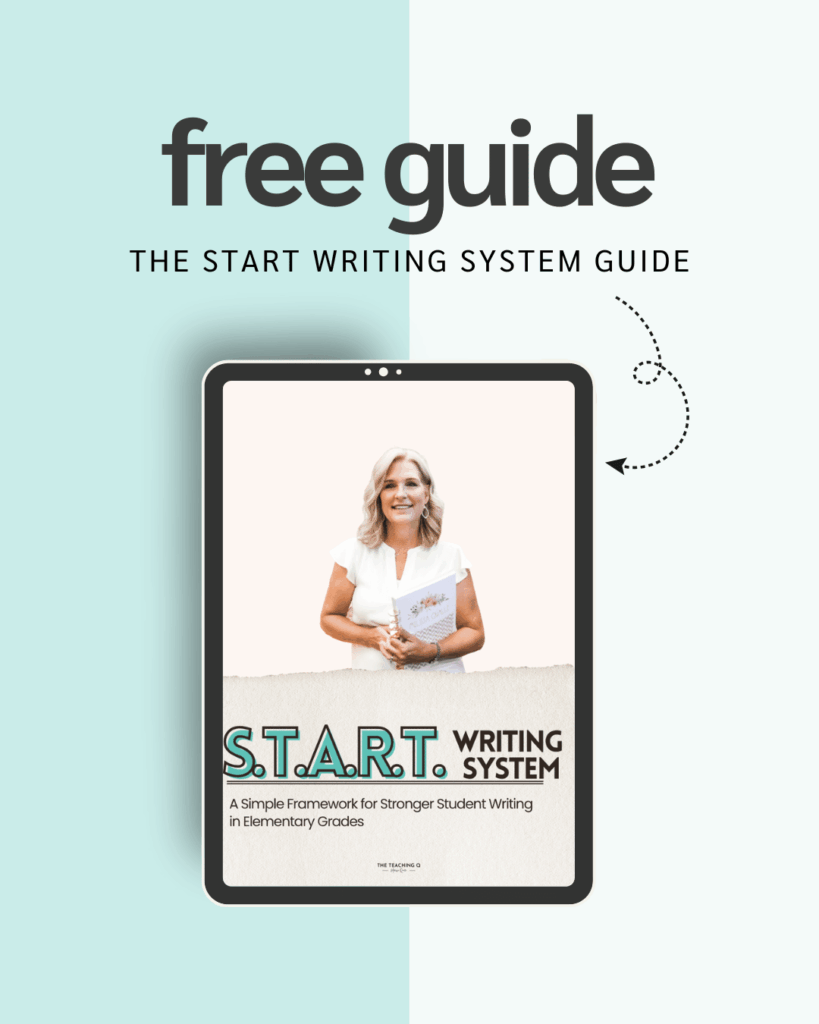
If writing instruction has been feeling a little scattered lately, the free START Writing System is a really helpful place to begin.
It breaks down:
- Structure First
- Teach & Model
- Active Engagement
- Respond & Refine
- Track & Celebrate
in a way that feels manageable and realistic for elementary classrooms.
The goal is not perfection.
It’s creating a writing block where students feel supported, understand the process, and slowly build confidence over time.
You can grab the free START Writing System here:
What’s Coming Next in This Series
In the next blog post, we’re diving into the “T” in START: Teach & Model.
I’ll be sharing:
- how I model writing in real time
- why think-alouds matter so much
- ways to help students expand their ideas
- and how modeling helps students feel less overwhelmed during writing
Because sometimes students do not need another prompt.
They just need to hear how writers think.