Narrative essay writing can feel overwhelming in the classroom, especially when students love telling stories but struggle to organize them on paper.
I remember sitting at my small group table listening to a student dramatically retell what happened at recess. There were suspects and clues. There was suspense. The story was detailed and creative.
Then I looked at the paper.
Three long sentences. No paragraph breaks. No clear beginning. The ending simply stopped.
That was the moment it clicked for me.
The problem was not imagination.
The problem was structure.
If narrative essay writing feels messy in your classroom, it is rarely because students lack ideas. It is usually because they need clearer structure and repetition.
Here are the simple shifts that help narrative essay writing finally click.
Keep Narrative Essay Writing Focused on Structure First
Narrative essay writing is not just storytelling. It is organized storytelling.
Students need to understand:
- What belongs in the introduction
- How events unfold in order
- Where dialogue fits
- How to end the story clearly
When the structure is unclear, students write everything they remember instead of building a focused story.
The first simple way to make narrative essay writing click is to make the structure visible. Talk about beginning, middle, and end often. Model what each section should do. Keep the expectations consistent.
Once students recognize the pattern, writing feels less overwhelming.
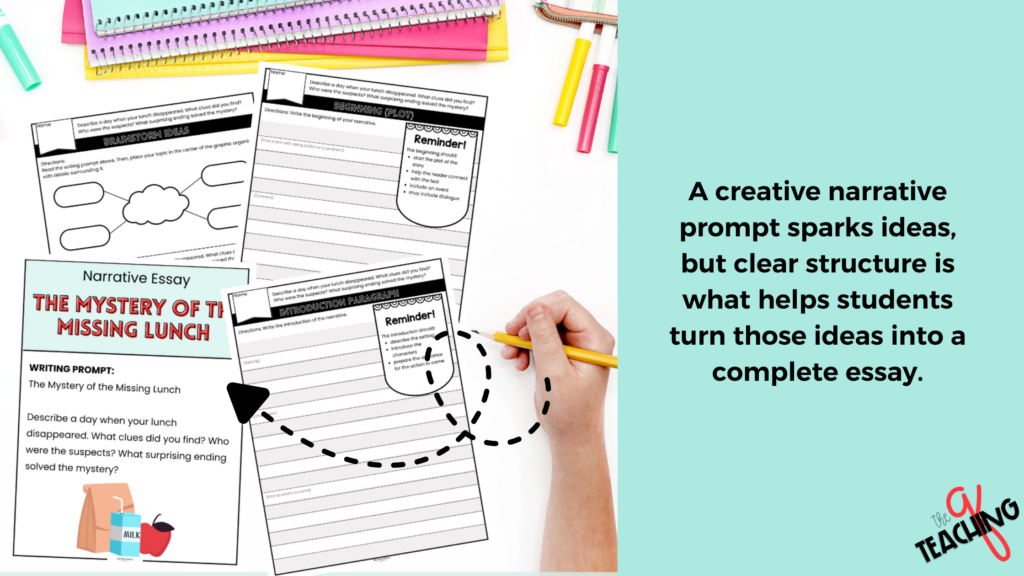
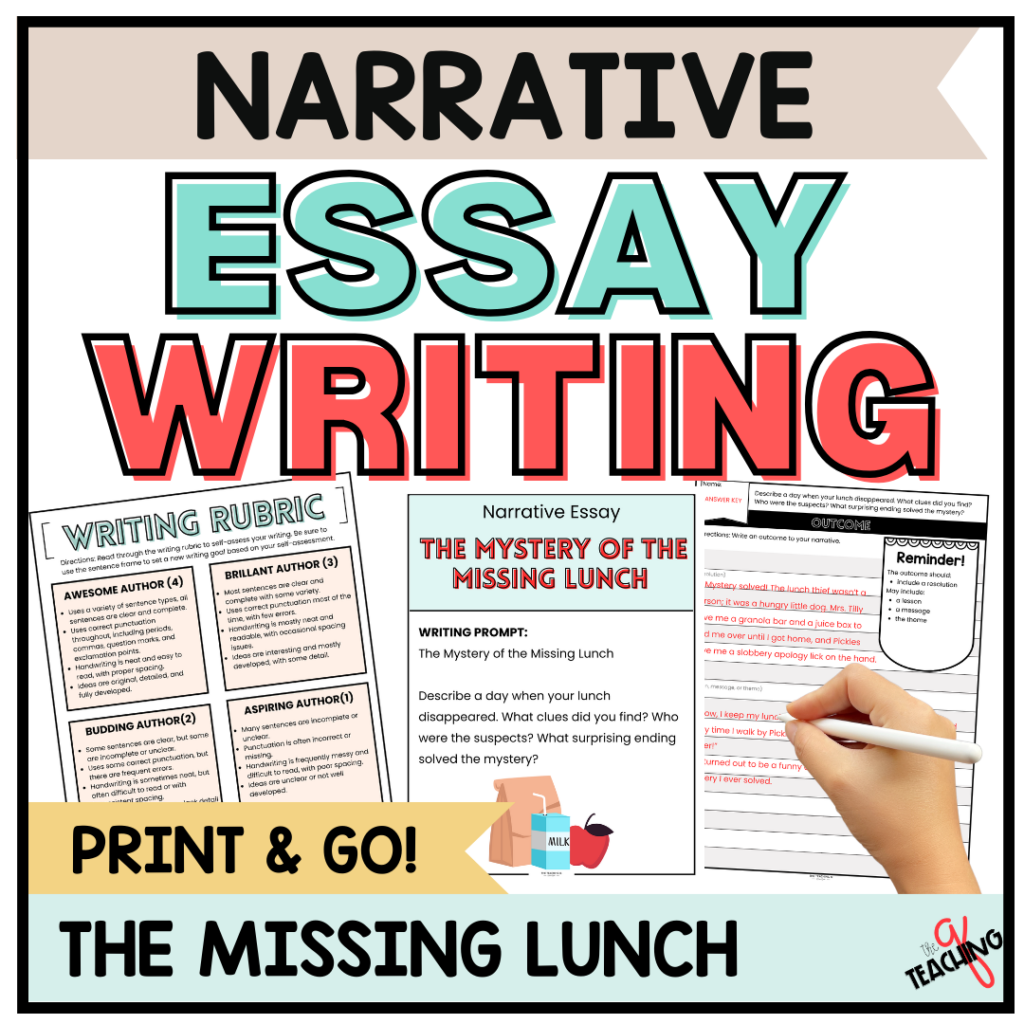
Prompts like The Mystery of the Missing Lunch grab attention. Students are eager to write.
But engagement alone does not build strong narrative essay writing.
Structure does.
Use Planning as a Simple Way to Strengthen Writing
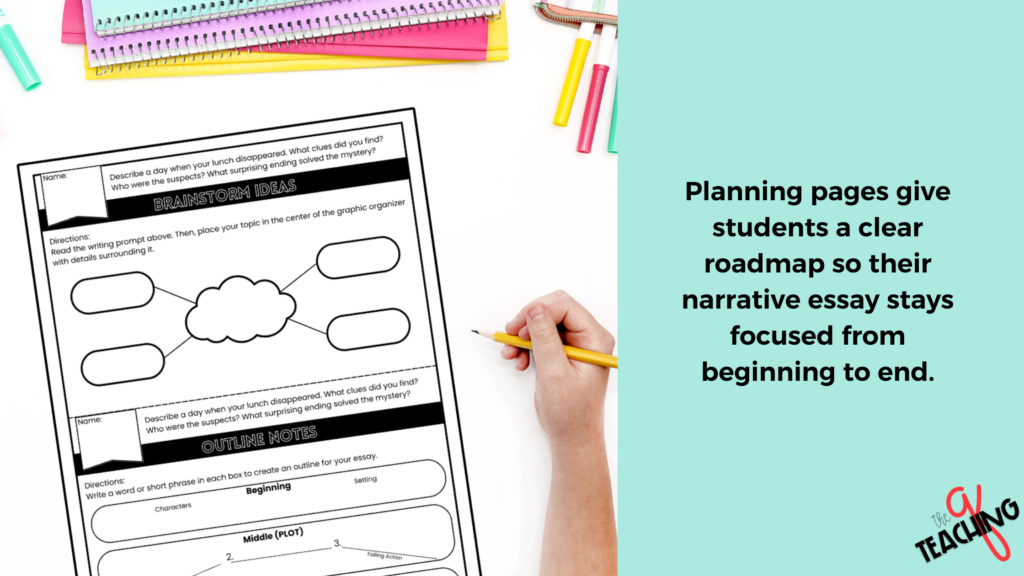
Another simple way to make narrative essay writing click is to slow down and plan.
Students often want to skip this step. They feel ready to write immediately. But without planning, stories wander.
Clear planning helps students:
- Identify the main problem
- Outline key events
- Decide where dialogue belongs
- Plan a strong ending
Planning does not limit creativity. It supports it.
When students use structured planning pages consistently, they stop guessing what comes next. They gain confidence because the roadmap is clear.
I have watched reluctant writers become more confident simply because they knew what step came next.
Predictability lowers anxiety.
Lower anxiety leads to stronger writing.
When Sentence Structure Holds a Story Back
Even when students understand story structure, narrative essay writing can still fall apart if sentence structure is weak.
You might notice:
- Dialogue without quotation marks
- Repeated sentence starters
- Choppy transitions
- Run on sentences
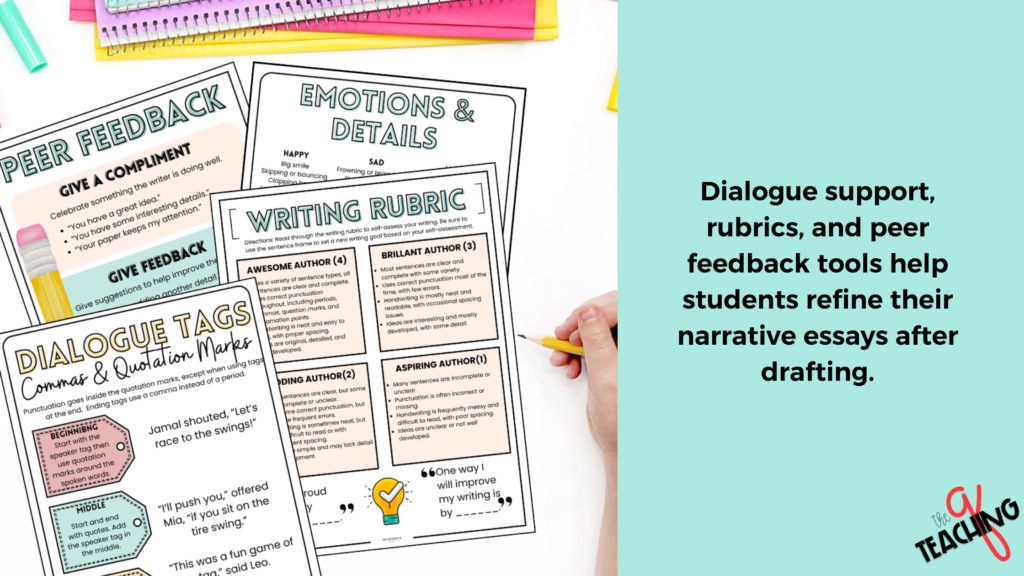
Narrative essay writing relies heavily on clear sentence structure. Dialogue tags, punctuation, and sentence variety help readers understand the story.
If you have ever thought, The ideas are there but the writing feels flat, it often connects back to sentence-level instruction.
I share more about that in this post on how to teach sentence structure to elementary students, because strong essays are built on strong sentences.
Strong narratives are built on strong sentences.
Keep Writing Consistent
Another simple way to make narrative essay writing click is consistency.
If every new assignment looks different, students spend more time figuring out directions than improving their writing.
Consistency builds confidence.
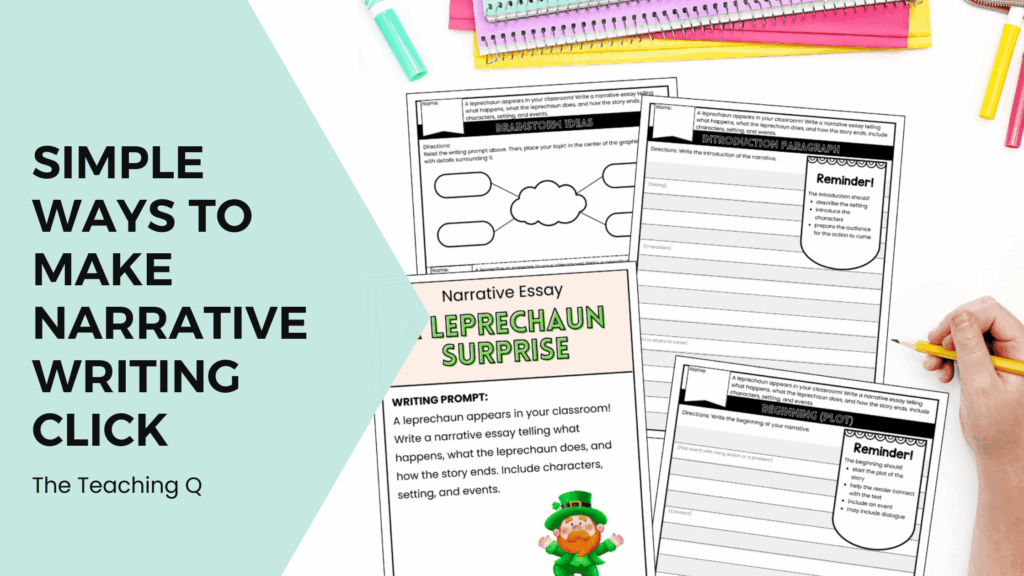
The Narrative Essay Writing Prompt Worksheets keeps expectations predictable.
Inside the resource, teachers have:
- Structured narrative prompts
- Brainstorming and planning pages
- Guided introduction and paragraph support
- Dialogue instruction
- Writing rubrics
The benefit is not just ready-made worksheets.
It is having a consistent framework students recognize.
When the format stays familiar, students focus on strengthening their story instead of decoding the process.
Revisit Narrative Essay Writing to Build Confidence
Narrative essay writing does not click after one assignment.
What Repetition Really Does
Repetition does not mean giving the same exact assignment over and over. It means reinforcing the same expectations in slightly different contexts.
When students repeatedly practice writing introductions, something changes. They stop staring at the page. They begin drafting more quickly. Then, they repeatedly practice dialogue punctuation and will pause naturally before adding quotation marks.
When they see the same rubric multiple times, they internalize what strong writing looks like.
Repetition removes uncertainty.
And uncertainty is often what makes writing feel overwhelming.
It clicks when students:
- Reflect using the same rubric
- Revisit the beginning, middle, and end structure
- Practice dialogue punctuation multiple times
- Use planning pages consistently
Repetition builds familiarity. Familiarity builds independence.
When students know what a narrative essay writing should look like, they begin to internalize it.
That is when writing feels manageable instead of overwhelming.
When Students Start Seeing Themselves as Writers
There is a quiet shift that happens in narrative essay writing when students begin to understand the structure.
They stop asking, “Is this right?”
They start asking, “Can I add more here?”
That difference matters.
When students feel unsure of the framework, they write cautiously. They play it safe. They rush endings because they are not confident in how to close.
But when narrative essay writing feels familiar, something changes.
Students reread their work. They adjust dialogue and expand descriptions. They take ownership.
You can see it in how they hold their paper. You can hear it when they volunteer to share.
Confidence grows when the process feels clear.
And confident writers improve faster than hesitant ones.
See Narrative Essay Writing in Action
If you would like to see a simple example of structured essay writing, you can grab a free sample here
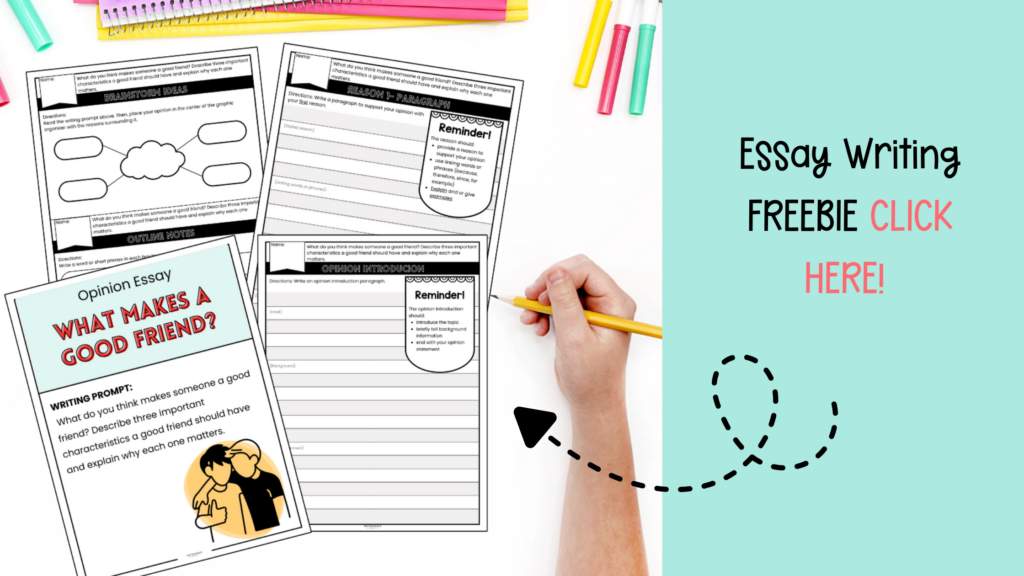
It is a practical way to see how prompts, planning pages, and structure work together to support student writers.
When the structure is clear, narrative essay writing becomes something students can handle.
And when they feel capable, growth follows.