Remember when writing felt like a chore?
If you’ve ever stood in front of your class and asked students to write an essay only to be met with groans, blank stares, or the dreaded “I don’t know what to write”, you’re not alone. Essay writing can feel overwhelming for young learners, and it’s easy for them to lose interest before they even begin.
The good news? Essay writing doesn’t have to be boring. With the right tools, prompts, and teaching strategies, you can turn those groans into excitement and curiosity. Here’s how to make essay writing more engaging, meaningful, and fun for your elementary students.
Essay Writing Tips
Tip 1: Start Essay Writing with What Students Already Love
The quickest way to hook writers is to tie essay writing to their passions. If your students are obsessed with animals, video games, or a recent holiday, use that interest as the foundation for your prompts.
For narrative essay writing, encourage students to write a story about their pet becoming a superhero. For opinion essay writing, ask them to argue whether pizza or tacos make the better school lunch. For informative essay writing, challenge them to teach the class how to take care of a hamster.

When students see a personal connection to the task, they’re far more likely to stay engaged and write with enthusiasm.
Tip 2: Break Down the Types of Essay Writing
One common struggle is that students don’t always understand the difference between narrative, opinion, and informative essay writing. Instead of lumping everything into “essays,” take time to explicitly break each type down with anchor charts, examples, and modeling.
- Narrative essays: tell a story with characters, setting, and a beginning, middle, and end.
- Opinion essays: state what the student thinks or feels and back it up with reasons.
- Informative essays: explain or teach something using facts and details.
This clarity helps students focus their energy on the right writing skills instead of feeling confused about what’s expected. For more strategies, you can check out How to Teach Narrative Writing That’ll Make Your Students Beg for More for tips that go beyond the basics.
Tip 3: Model the Essay Writing Process Together
When students are reluctant writers, they need to see essay writing in action. Try modeling how to plan and write an essay as a class. Use think-alouds, brainstorming webs, or shared writing to show them step by step how ideas move from messy notes to structured paragraphs.
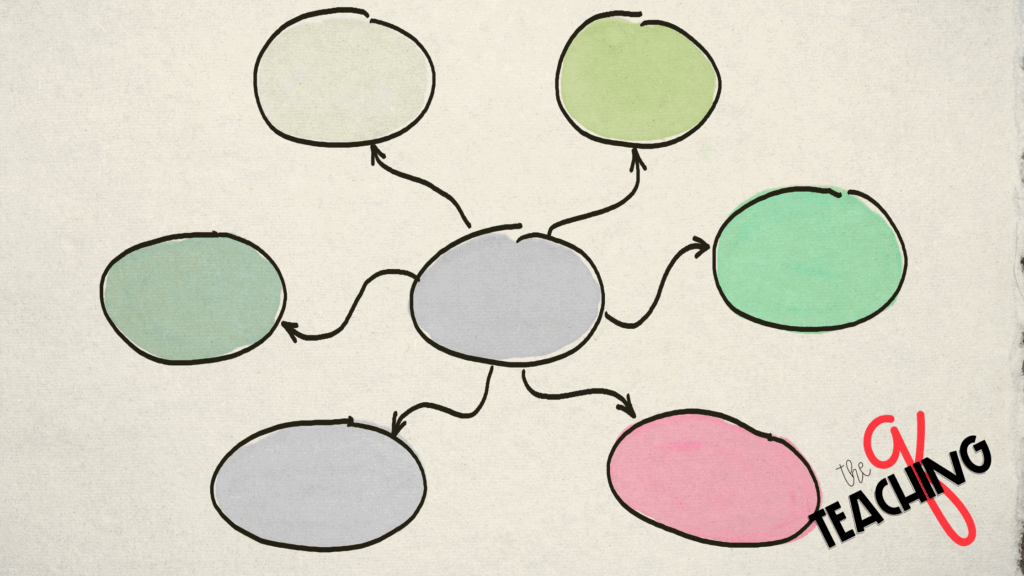
This practice not only takes away the mystery of essay writing but also shows students that even teachers revise and make mistakes. The more transparent the process, the more confident your students will feel about tackling essays on their own.
Tip 4: Use Tools That Make Essay Writing Manageable
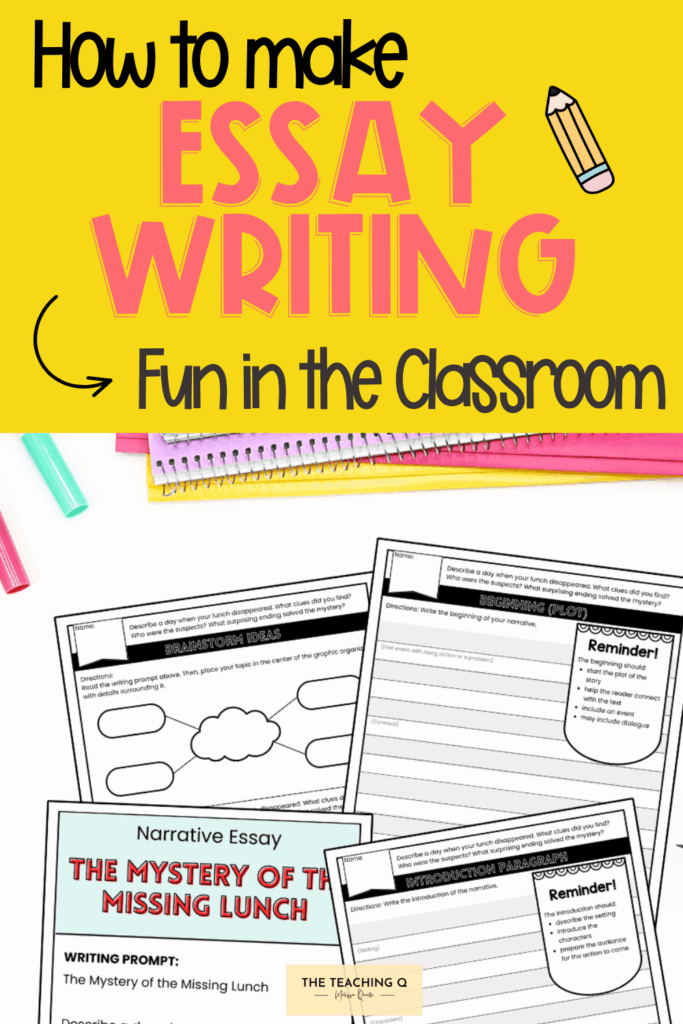
One of the biggest challenges with essay writing in elementary classrooms is keeping students engaged while also ensuring they meet expectations. Sometimes the biggest hurdle for students is simply getting started with essay writing. Visual prompts and sentence starters can give them the jumpstart they need.
Prompts with pictures immediately spark ideas, while sentence starters like “One reason I believe…” or “First, next, finally…” give students a scaffold for their thoughts. For example, you can have resources that include:
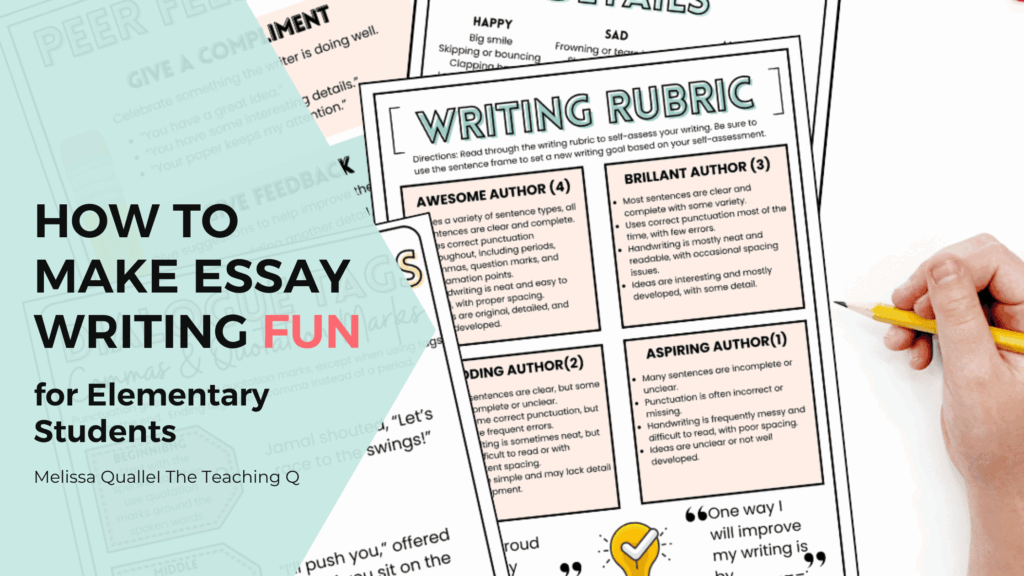
- Peer Feedback Guides – Students learn how to give compliments and constructive feedback, which builds a supportive classroom writing community.
- Writing Rubrics – These help students self-assess and set goals for their own writing. The rubric breaks down what makes an “Awesome Author” versus an “Aspiring Author,” giving kids concrete steps to improve.
- Dialogue Tags Practice – Worksheets provide examples of how to properly punctuate dialogue and use quotation marks, a skill many students struggle with.
- Emotions & Details Charts – Visual supports encourage students to add depth and variety to their essays by expanding on how characters feel or how situations unfold.
These ready-to-go pages are not only engaging for students but also low-prep for teachers, making essay writing less overwhelming. By breaking writing into smaller, scaffolded steps, students gain confidence and teachers save time.
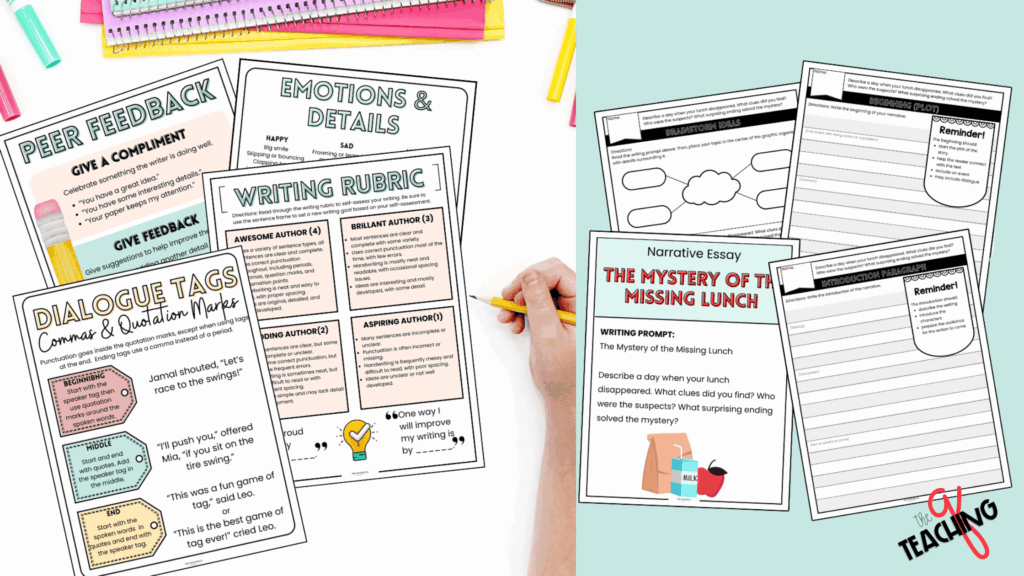
I have a resource just for you if you are looking for these things: Essay Writing Prompt Worksheets. With ready-to-go prompts for narrative, opinion, and informative essay writing!
Tip 5: Incorporate Essay Writing into Daily Routines
Essay writing doesn’t need to be reserved for big projects. Build it into your daily and weekly routines. Here are some easy ways:
- Whole-class lessons where you introduce and practice one type of writing.
- Small-group reteaching for students who need extra support.
- Literacy centers with prompts or graphic organizers.
- Early finisher tasks to keep students meaningfully engaged.
- Morning seatwork that gets students writing right away.
- Sub plans that keep learning on track even when you’re out.
When essay writing becomes part of the rhythm of the classroom, it feels less like an event and more like a natural way of communicating.
Tip 6: Give Students Choice and Voice in Essay Writing
Choice is one of the most powerful motivators in the classroom. Whenever possible, let students choose which essay writing prompt to respond to, or even create their own within a theme.
This small adjustment can have a huge impact. Suddenly, essay writing isn’t a forced task. It’s an opportunity to share their unique thoughts and stories.
Tip 7: Build Excitement Around Narrative Essay Writing
Narrative essay writing is often a favorite among students because they can let their creativity shine. Adding fun twists like a “happy ending” challenge or a silly scenario makes it even better.
For example, you can try this activity from Narrative Writing Prompt with a Happy Ending. Students start with a tricky problem but must finish their essay with a positive ending. It teaches them about essay structure while also reminding them that writing can be lighthearted and fun.
Tip 8: Celebrate Essay Writing Success
Sharing student essays is a game-changer. Whether it’s a classroom “author’s chair,” a bulletin board display, or a digital slideshow, giving students an audience makes their essay writing feel purposeful.
Celebration doesn’t have to be complicated. Simply taking five minutes for students to read their essays aloud can boost confidence and help them see the value in their hard work.
Using Resources to Support Essay Writing
While creativity and flexibility are key, sometimes having structured resources can make all the difference. The essay writing worksheets mentioned earlier provide that balance, with engaging prompts and built-in support that save you planning time while giving your students the structure they need.
It includes 18 different resources, each with its own collection of prompts, activities, and writing supports. That means you’re not just getting a handful of worksheets, you’re getting an entire library of tools to use throughout the year. From seasonal prompts to creative storytelling ideas and structured essay outlines, the bundle makes it easy to adapt lessons for different times of year and student interests.
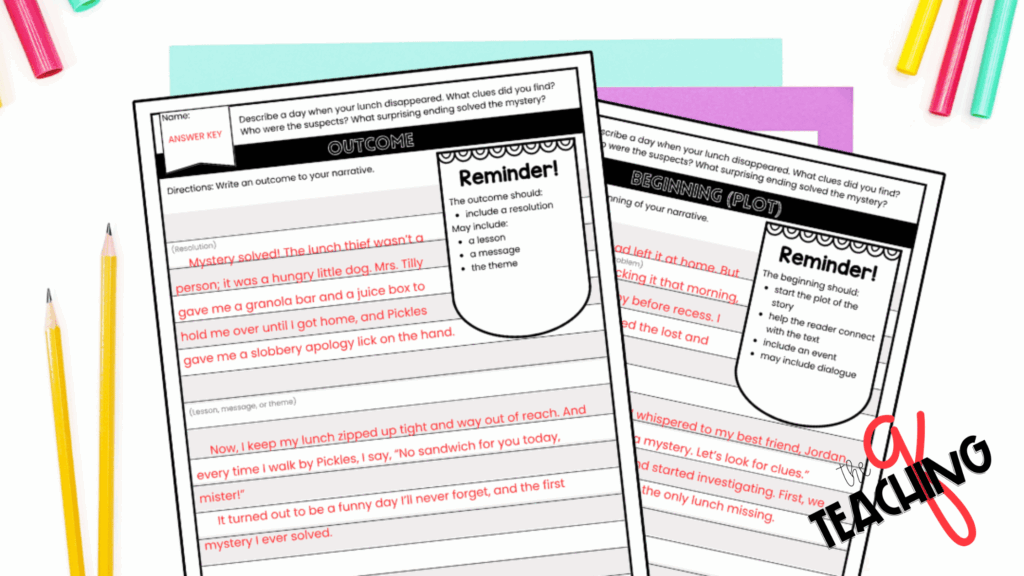
Pair these with mini-lessons, anchor charts, and interactive writing activities, and you’ll have a well-rounded approach to teaching essay writing all year long.
Essay writing doesn’t have to be a dreaded task for you or your students. By starting with student interests, breaking down essay writing types, modeling the process, and using engaging prompts, you’ll build a classroom where students are eager to share their ideas.
And if you’re looking for even more strategies, check out these posts:
- How to Teach Writing to Elementary Students
- How to Inspire Creativity in Elementary Students with Paragraph Writing Prompts
Don’t Miss This Freebie
Before you go, I have a fun freebie to help you keep essay writing fresh and exciting in your classroom. Grab my free Taco Writing Activity, where students build a “taco” one ingredient at a time, sentence by sentence. It’s an interactive way to break essay writing into smaller steps, and it’s always a hit with students.
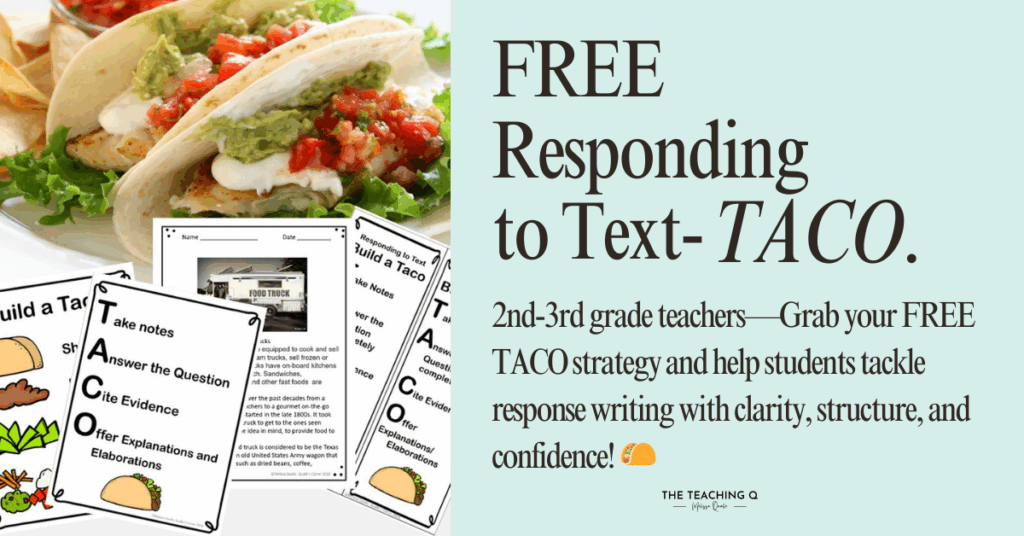
This freebie pairs perfectly with the essay writing strategies we covered above, giving you one more easy-to-implement tool that your students will love.