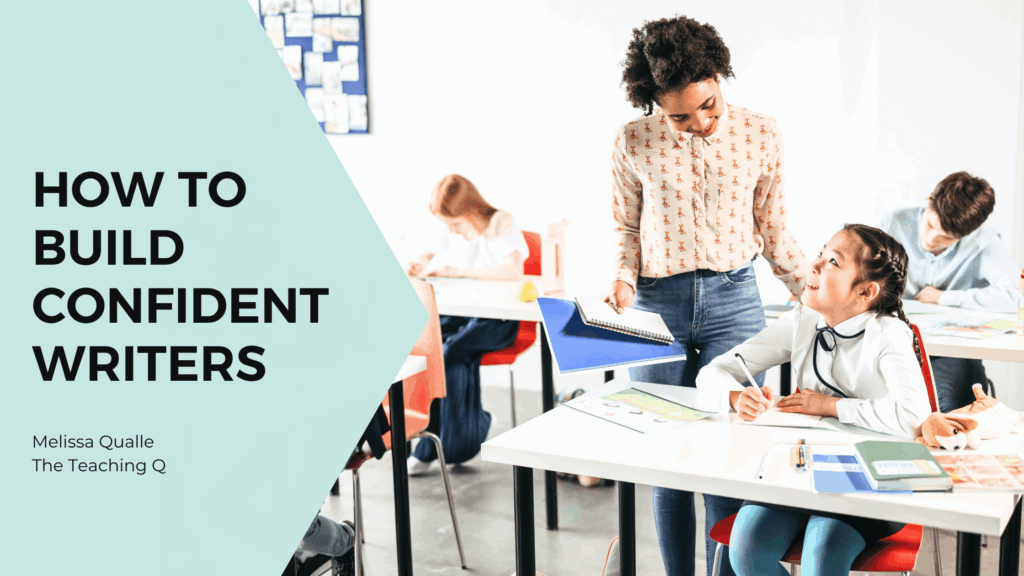
How Do You Build Confident Writers in 2nd and 3rd Grade?
Teaching writing in elementary school isn’t just about handing students a prompt and hoping for a paragraph. It takes clear modeling, scaffolded support, peer collaboration, and time to build confidence.
If you’re wondering how to teach writing in 2nd or 3rd grade in a way that sticks, these 10 essential writing elements will give you the structure and strategy you need. These are the must-haves I use daily in my own classroom—and they’ve transformed my writing block.
Let’s break them down!
What Are the Most Important Writing Skills for 2nd and 3rd Graders?
Here are the foundational elements every elementary writer needs in place to grow, revise, and write with purpose.
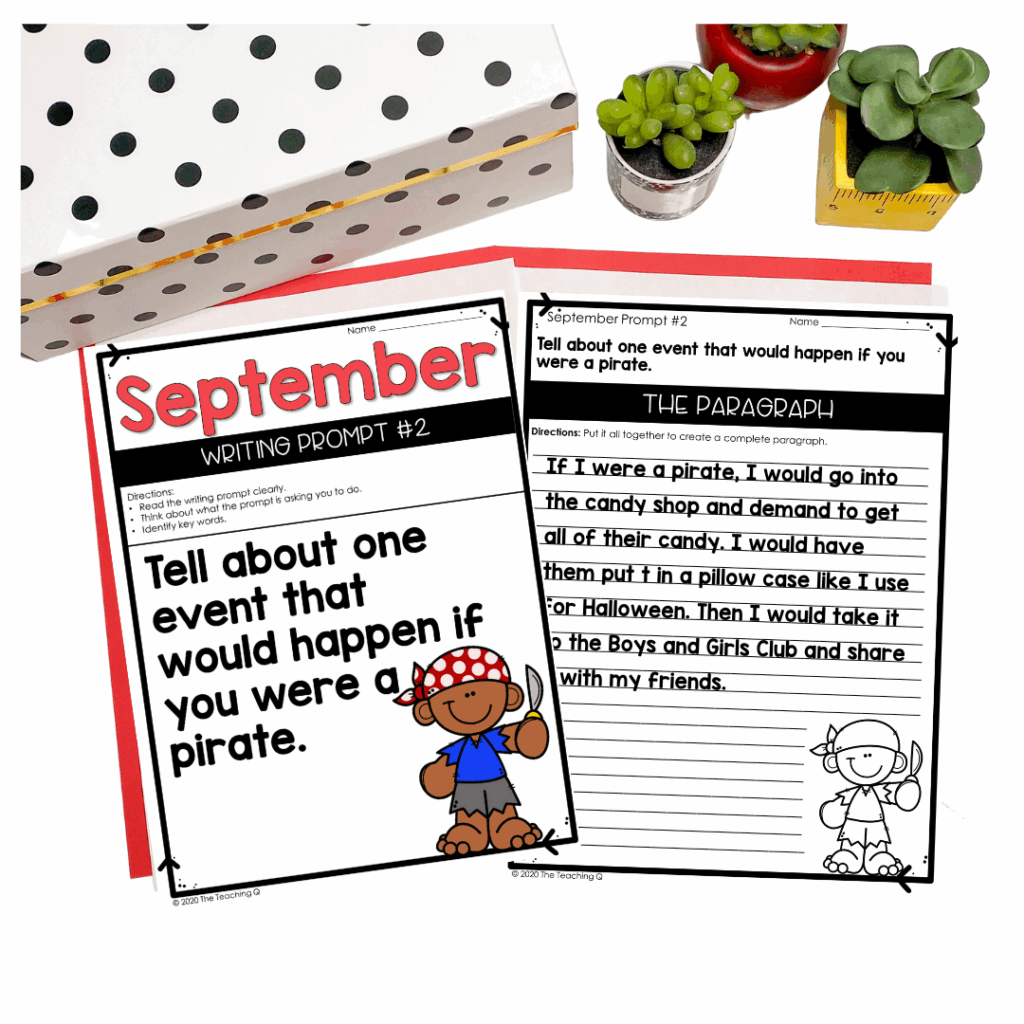
1. 📝 A Clear Prompt on Every Paper
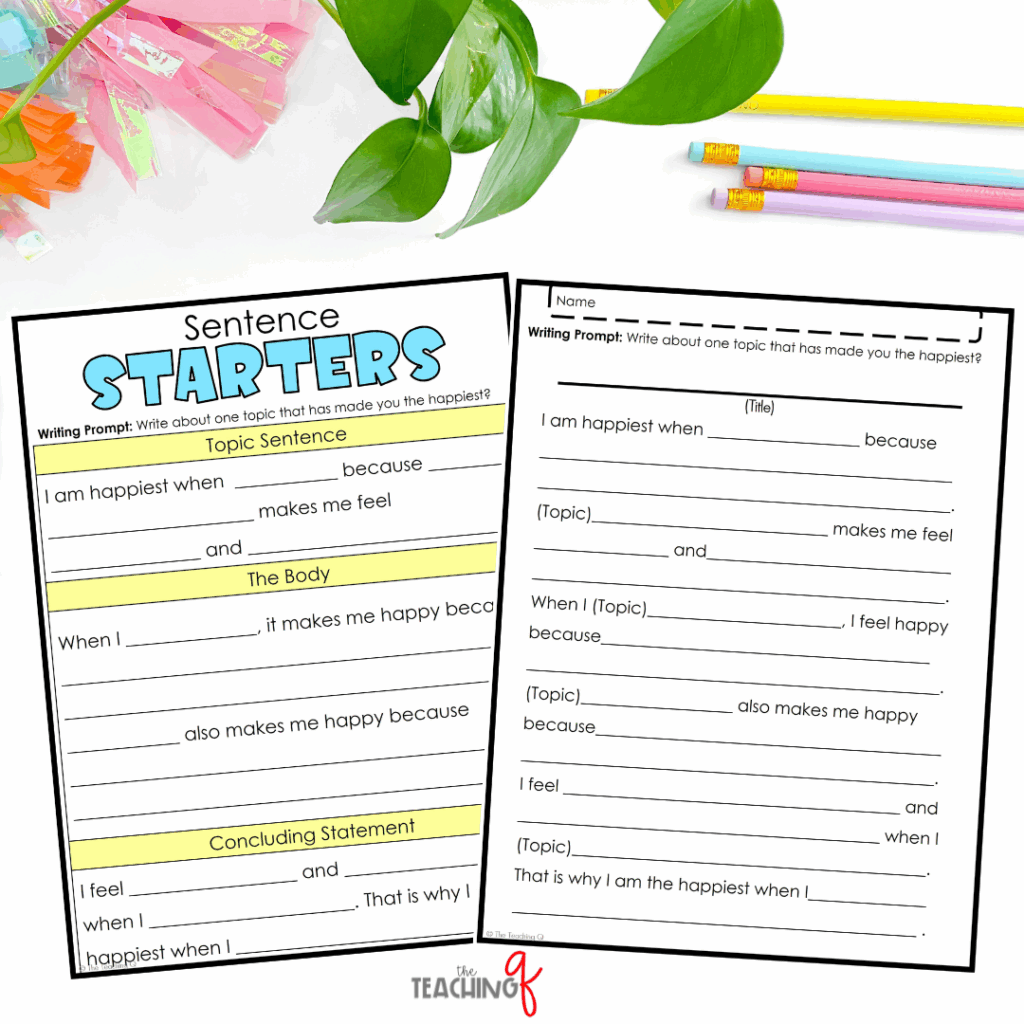
A writing prompt gives students direction and keeps them focused. Whether it’s narrative, opinion, or informative writing, your students will write more successfully when the prompt is visible on every page.
✅ Teacher Tip: Post the prompt on the board, print it on the paper, or write it in their journals to keep students anchored.
✅ Example: You can find this in many of my resources, such as in the Paragraph of the Week Writing Worksheets.
2. 💬 Sentence Stems & Anchor Charts
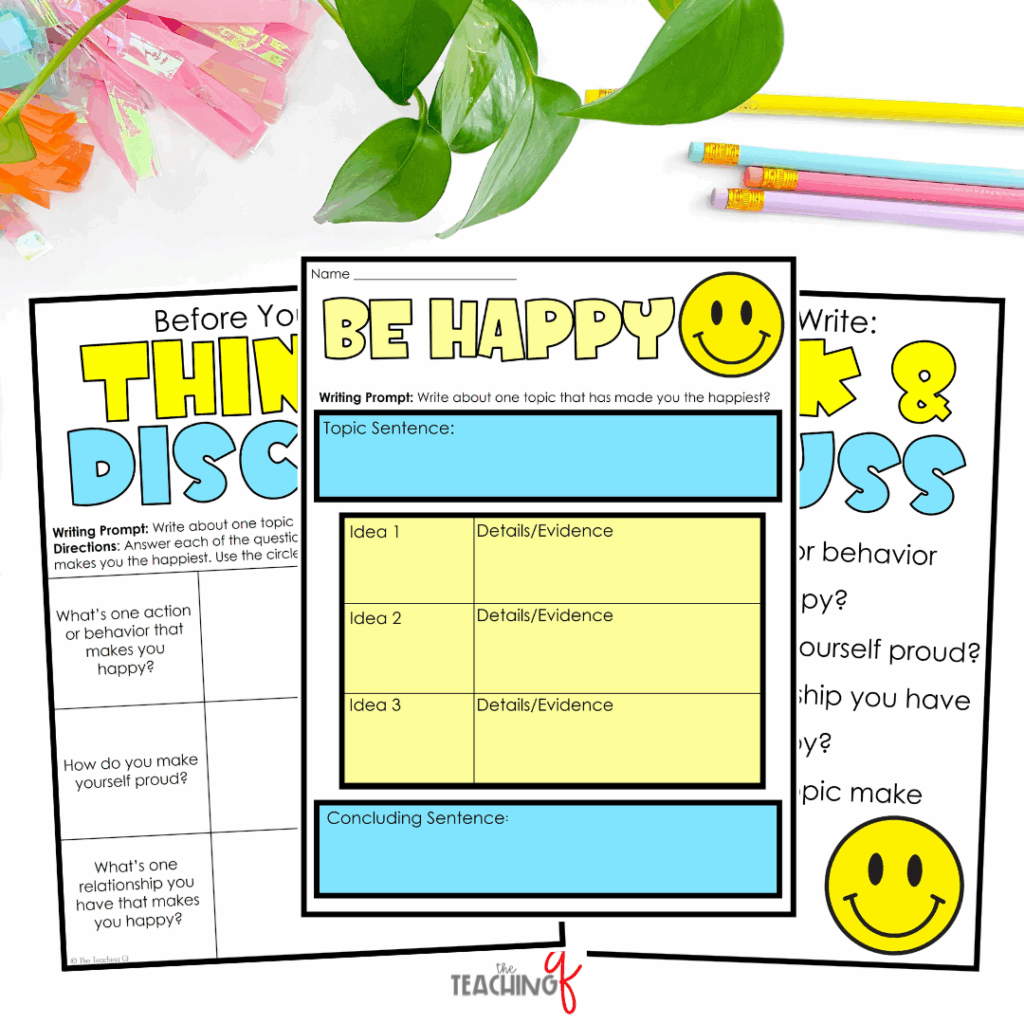
Sentence starters help even your most reluctant writers begin with confidence. Anchor charts offer consistent visual reminders of structure, genre features, and grammar tips.
✅ Teacher Tip: Keep genre-specific charts up during units and provide table copies or folders for easy access.
✅Example: The Writing Craftivity Lessons include sentence stems & anchor charts to support reluctant writers.
3. 📖 Model Texts
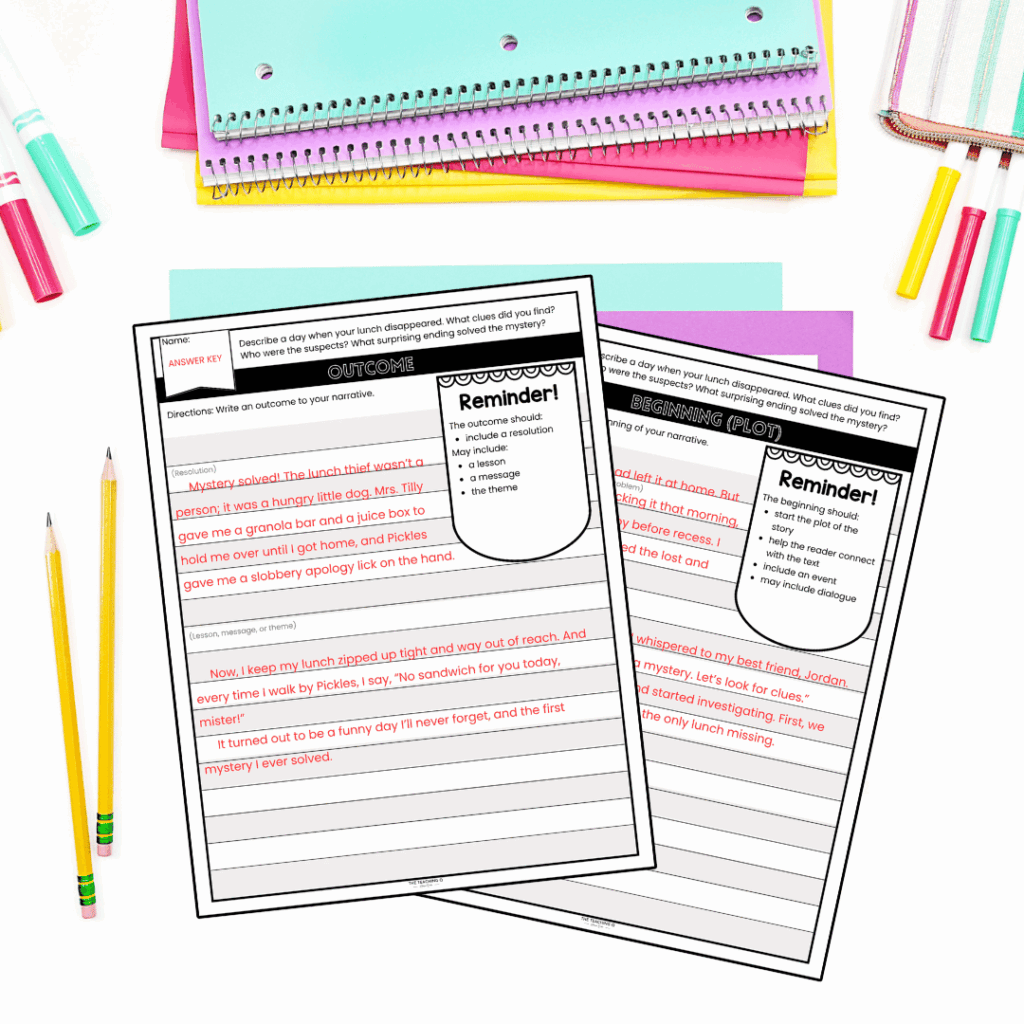
Students need to see what strong writing looks like. Model texts (either published or teacher-written) give students a clear goal to aim for and a reference for structure, transitions, and voice.
✅ Teacher Tip: Highlight parts of the text that show craft and structure—then encourage students to mimic them.
✅Example: Each of the Informative, Opinion, Narrative Essay Writing Lessons includes sample texts to make modeling writing simple.
4. 👩🏫 Teacher Talk & Live Modeling
Your voice is the most powerful writing tool in the room. Use think-alouds to show students how to brainstorm, plan, revise, and check for clarity.
✅ Teacher Tip: Write in front of your students daily, even if it’s just one sentence at a time.
5. 🤝 Partner Share & Discussions
Talking leads to stronger writing. Give students time to rehearse their ideas with a peer before writing, and time to share after.
✅ Teacher Tip: Use turn-and-talk routines, buddy brainstorming, and peer conferences to build fluency.
6. 🧱 Scaffolded Mini Lessons
Rather than overwhelming students with too much at once, teach one writing skill at a time, such as topic sentences, adding details, or using dialogue. Keep lessons short, specific, and skill-based.
✅ Teacher Tip: Repeat the same skill for several days with new examples for deeper mastery.
7. 🎯 Differentiation for Every Writer
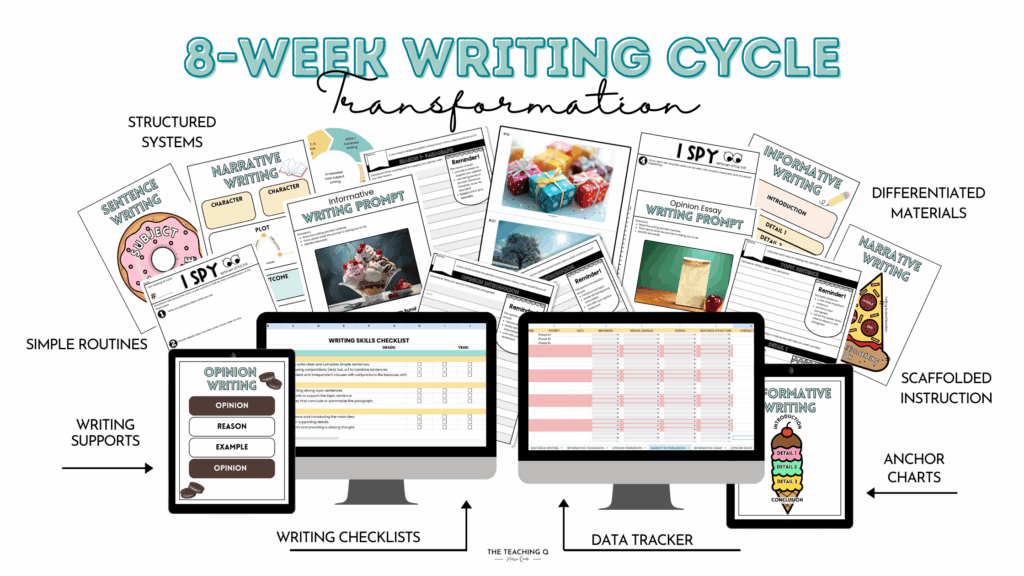
All students are writers, but they don’t all start in the same place. Offer leveled sentence stems, optional visuals, modified checklists, and graphic organizers so every student can participate and grow.
✅ Teacher Tip: Use writing folders with differentiated tools and goals tailored to small group needs.
✅Example: The 8-Week Writing Cycle Transformation was designed to make differentiating easy on the teacher while keeping it sly with the students. Check it out to get started.
8. ✂️ Partner Edit & Revise Practice
Students improve their writing when they get meaningful feedback and also when they give it! Partner editing teaches kids how to reflect on content, structure, and conventions together.
✅ Teacher Tip: Provide editing checklists and sentence stems like “Can you tell me more about…” or “What if you added…”
9. 📊 Self-Evaluation & Rubrics
Reflection builds independence. Teach students how to use simple rubrics and self-checklists to assess their work and set writing goals.
✅ Teacher Tip: Use color-coded rubrics and self-reflection slips to build accountability and ownership.
✅ Examples: Many of the resources already highlighted, such as the Monthly Writing Craftivities and Essay Writing Units include self-Evaluation Checklist and Writing Rubrics.
10. 📣 Sharing Out & Celebrating Writing
Publishing and sharing help students feel proud of their progress. It motivates them to revise, pay attention to conventions, and take writing seriously.
✅ Teacher Tip: Try author’s chair, writing walls, mini-publishing parties, or parent publishing day!
✅ Example: I have a full list with explanations for celebrating student writing in this blog post.
🔄 How Can I Make Writing a Daily Routine?
The key to daily writing success is consistency and structure. Integrate writing across the day using:
- Morning journal prompts
- Response writing in all subjects
- A dedicated writing block with the 10 elements above
- Small group or conferencing time to personalize instruction
✨ Remember: Repetition and modeling are your best tools. It’s not about doing something new every day, rather it’s about doing the most important things well and often.
🚀 What’s the Best Way to Grow Confident Writers?
To truly grow writers in 2nd and 3rd grade, shift from assigning writing to teaching writing. When students have a clear prompt, visual tools, consistent modeling, peer feedback, and chances to reflect and celebrate all they become motivated, capable, and proud of their progress.
📚 Ready to Dive Deeper?
Over the next few weeks, I’ll be breaking down each of these 10 essential writing elements in separate blog posts, so you’ll get ideas, mini lessons, and printable tools for each one.
➡️ Bookmark this post
➡️ Subscribe to my email list
➡️ Follow me on Instagram for updates
And if you’re looking for a complete system that puts all these elements into action, check out my 8-Week Writing Cycle Transformation Course—built for 2nd and 3rd-grade teachers just like you!
-Melissa